
How to Sell Handmade Jewellery Online: 10 Easy Steps
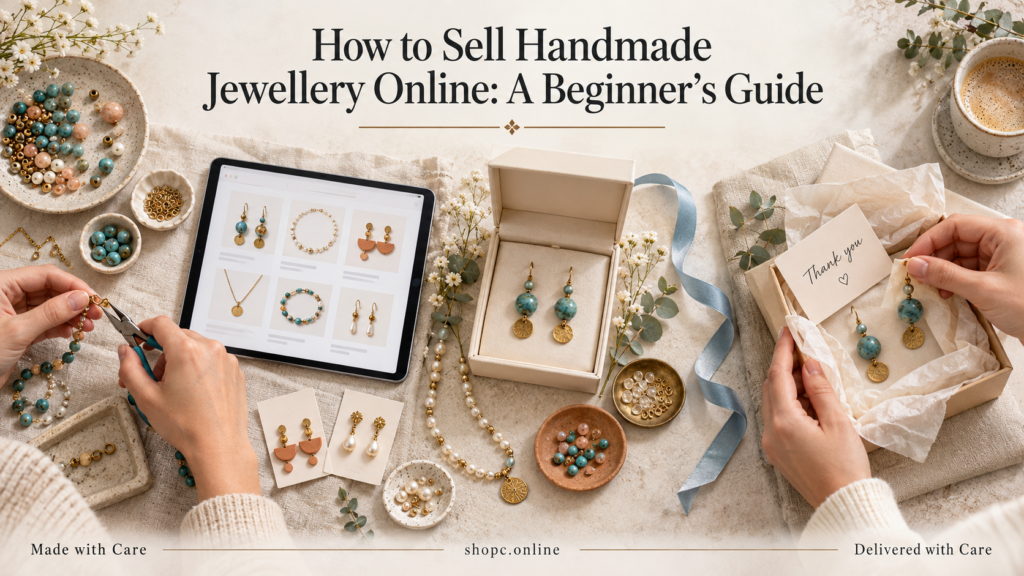
How to Sell Handmade Jewellery Online: A Beginner’s Guide
Learning how to sell handmade jewellery online begins with helping someone understand a piece they cannot hold or try on.
A customer may love the colour of your earrings but wonder whether they are heavy. A bracelet may look attractive in a photograph, yet the buyer needs to know whether it will fit. Someone purchasing a necklace as a gift may want to check the packaging and delivery date.
For makers in Salem, Chennai, Coimbatore and across Tamil Nadu, these details deserve as much attention as the design itself.
Whether you make beaded necklaces, clay earrings or hand-assembled bracelets, start with a small collection, clear descriptions and a price that accounts for your work. This guide explains the steps for sellers and the checks that help customers buy confidently.
How to Sell Handmade Jewellery Online in 10 Steps
1. Begin with a Collection You Can Make Consistently
Choose a manageable range instead of trying to offer every design at once.
You might begin with a collection of beaded bracelets, a few earring designs or matching necklace-and-earring sets. Select pieces you can reproduce with reasonably consistent dimensions and finishing.
Before listing a design, check:
- Whether the materials are available.
- How long each piece takes to make.
- Whether you can repeat the design.
- How you will pack it.
- Whether it is ready to ship or made to order.
You can also offer one-of-a-kind pieces. If you do, clearly identify them and remove the listing or update its availability after a sale.
For customers, a focused collection makes comparison easier. They can understand your style and see the differences between designs.
2. Explain What Makes the Jewellery Handmade
“Handmade” should describe the actual work involved.
You may shape clay components, string beads, wrap wire, weave thread or assemble purchased components into your own design. Explain that process accurately.
For example:
“Hand-assembled using blue glass beads and a metal clasp.”
This gives customers more information than “premium handmade jewellery.”
Do not describe a ready-made product bought for resale as something you personally crafted. If you use purchased charms, chains or findings, you can still explain the design and assembly work you performed.
A short photograph or video of your real making process can help customers understand the work behind the finished piece. Share only images you own or have permission to use.
3. Identify Materials and Finishes Clearly
Customers need to know what touches their skin and what they are paying for.
Describe the main components, including beads, thread, wire, hooks, posts, clasps and decorative parts. State verified metal composition and plating information where available.
Keep these descriptions distinct:
| Description | What the wording communicates |
|---|---|
| Gold-tone | A gold-coloured appearance |
| Gold-plated | A coating of gold over another material, which should be identified when known |
| Solid gold | A precious-metal claim requiring appropriate verification |
| Glass beads | Beads made from glass |
| Natural gemstone beads | A material claim that needs supporting evidence |
Avoid calling glass or imitation beads natural gemstones.
Do not use claims such as “nickel-free,” “hypoallergenic,” “waterproof” or “never tarnishes” without reliable support. If a supplier has not confirmed a component’s composition, investigate before making a specific claim.
Buyers with known material sensitivities should check the details and ask questions before ordering. No seller should promise that a piece will suit every person.
4. Measure Size, Length and Weight
Measurements turn a beautiful photograph into a useful product listing.
For necklaces, provide the chain or strand length and any extender length. For bracelets, state the inner circumference or the measured adjustable range. For earrings, provide the drop length and clarify whether the weight is for one earring or the pair.
For rings, name the sizing system and provide useful measurements where possible.
Avoid writing only “free size” or “lightweight.” Give customers something they can compare with jewellery they already wear.
For example:
- Necklace length: 42 cm, plus a 5 cm extender.
- Earring drop: 4 cm, including the hook.
- Weight: 8 g per pair.
These are examples, not standard measurements. Measure each actual design.
For adjustable pieces, explain how the adjustment works and its limits. Do not assume one size fits everyone.
5. Photograph the Details Customers Cannot Inspect
You do not need an elaborate studio to begin jewellery product photography. A clean background, stable camera and soft, even lighting can produce useful images.
Create a small photo set showing:
- The complete item.
- A close-up of the material and finish.
- The back, clasp or fastening.
- A view showing scale.
- The package contents.
Use a ruler, labelled dimensions or an appropriate worn photograph to explain size. If using a model, obtain permission and keep attention on the jewellery.
Avoid filters that change colours or conceal surface details. Show each colour variant accurately.
For handmade pieces with slight variations, explain what may differ. Normal variation should not be used to excuse broken parts, sharp edges or an item that differs substantially from its description.
6. Write Product Titles and Descriptions That Help Buyers
A clear title should identify the item, material or colour and its distinguishing feature.
Examples include:
- Blue Glass Bead Bracelet with Adjustable Cord.
- Terracotta Drop Earrings with Hand-Painted Floral Detail.
- Green Beaded Necklace with Matching Earrings.
Use these titles only for products that match the descriptions.
In the main description, explain the design, dimensions, fastening, materials and package contents. Add a short note about the making process when it is relevant.
Instead of:
“Best beautiful jewellery for all occasions.”
Write something specific:
“This hand-assembled necklace combines green glass beads with a gold-tone clasp. The listing includes the necklace only; matching earrings are sold separately.”
Google’s guidance on helpful, reliable content encourages information that serves readers. For jewellery sellers, that means answering purchase questions instead of repeating keywords.
7. Price Your Jewellery to Include Your Time
Materials are only one part of handmade jewellery pricing.
Include the time spent making and finishing the piece, as well as packaging and applicable selling costs. Otherwise, a busy month can still leave you earning very little for your work.
Here is an illustrative calculation:
| Cost item | Example amount |
|---|---|
| Beads, findings and other materials | ₹120 |
| Making time | ₹100 |
| Packaging | ₹25 |
| Assumed selling and payment charges | ₹35 |
| Seller’s delivery contribution | ₹40 |
| Total of these costs | ₹320 |
| Selling price | ₹420 |
| Amount remaining before other expenses and applicable taxes | ₹100 |
These figures are examples, not ShopC’s fees.
Consider other costs such as tools, damaged materials, photography, returns and business overheads. Confirm platform charges and payout terms before setting your final price.
For buyers, explain what the price includes. Gift wrapping, customisation or matching pieces should not appear included unless they actually are.
8. Separate Ready-to-Ship and Made-to-Order Products
Customers should know whether the item already exists or will be made after purchase.
For ready-to-ship jewellery, keep quantities current. For made-to-order pieces, state the preparation time separately from delivery time.
If you offer customisation, confirm:
- The available colours or materials.
- The requested measurements.
- Spelling for names or initials.
- Any additional price.
- The agreed design.
- Preparation time.
- The applicable cancellation and return conditions.
Keep a record of the customer’s approved choices.
Do not promise custom-order tools are available on a platform without checking. Ask how those orders should be handled before listing the service.
A buyer ordering for a birthday or family function should allow time for both production and delivery.
9. Check Quality and Pack Each Piece Carefully
Before packing, inspect the fastening, links, knots and decorative components. Look for loose parts, damaged finishes and sharp edges.
Check that the product matches the selected variant and quantity.
Use packaging suited to the design:
- Secure earrings so they do not move freely.
- Separate delicate components.
- Prevent chains from tangling.
- Protect items from crushing.
- Include appropriate care instructions.
Care advice should match the actual materials. Avoid applying one cleaning method to every piece.
ShopC’s shipping policy explains that delivery availability depends on the customer’s location and the serving vendor. Confirm the arrangements relevant to your business before promising a delivery date.
10. Build Trust Through Clear Policies and Helpful Replies
Customers often ask about weight, length, materials and colour. Treat those questions as clues about what your listing needs.
If several buyers ask whether earrings come as a pair, add that detail prominently. If customers cannot judge a necklace’s length, improve the measurements and photographs.
Make return information easy to find. ShopC’s returns and refunds page states that eligibility can differ by product and vendor.
Customers should check the conditions for the particular item, especially where customisation or product-specific restrictions apply. Sellers should avoid blanket promises that every purchase is returnable.
For platform or order enquiries, use the ShopC contact page.
Ask for genuine feedback after delivery. Never invent customer reviews or pressure buyers to leave positive ratings.
Sample Handmade Jewellery Product Listing
This fictional example shows how to organise the information. Replace every detail with verified information about your own product.
Blue Glass Bead Necklace with Adjustable Length
This necklace is hand-assembled using blue glass beads and a gold-tone brass clasp. It measures 42 cm, with a 5 cm extender for adjustment. The photographs show the bead arrangement, fastening and full necklace.
The package contains one necklace. Earrings and display props are not included.
| Product detail | Example information |
|---|---|
| Product type | Hand-assembled beaded necklace |
| Bead material | Glass |
| Clasp material | Gold-tone brass |
| Main colour | Blue |
| Necklace length | 42 cm |
| Extender | 5 cm |
| Weight | 28 g |
| Package contents | One necklace |
| Availability | Ready to ship |
| Care | Store dry and separately; follow the material-specific care instructions supplied |
For a real listing, also add the price, stock quantity, verified dispatch estimate and applicable return conditions.
What Customers Should Check Before Buying Handmade Jewellery
A good listing helps buyers compare pieces on more than appearance.
Material and Finish
Check whether the item uses glass, clay, natural stones, metal or a combination. Read plating and metal descriptions carefully, particularly if you have known sensitivities.
Measurements and Weight
Compare the listed size with a piece you already own. Check whether the weight given for earrings means one earring or the pair.
What Comes in the Package
Confirm whether the price covers one item, a pair or a complete set. Check whether gift packaging is included.
Preparation and Delivery Time
A made-to-order item may need preparation before dispatch. Review both stages if buying for a particular date.
Care and Return Conditions
Check how the item should be stored and cleaned. Read the applicable return policy before purchasing, and retain the order confirmation.
You can explore ShopC’s Jewellery and Watches category and review individual product details. Do not assume every item in the category is handmade; check each seller’s description.
Starting Your Handmade Jewellery Business on ShopC
Prepare a small collection with accurate descriptions, clear photographs and realistic stock or production information.
Then review the ShopC vendor registration page. Confirm the required documents, current charges, payout schedule and arrangements for shipping and returns.
Before applying, have these basics ready:
- Business name and contact details.
- Product photographs and specifications.
- Prices and stock quantities.
- Packaging plan.
- Production times for made-to-order pieces.
- Information requested by the seller application.
Once your listings are approved and live, share the relevant store or product links through your business pages and with customers who have agreed to receive updates.
Frequently Asked Questions
How Do I Sell Handmade Jewellery Online as a Beginner?
Start with a manageable collection. Verify materials, measure each design, take clear photographs and calculate a price that includes your time. Review marketplace terms before registering and listing products.
How Many Designs Should I Launch With?
Choose a number you can make, photograph and manage consistently. Five to ten designs can be a practical starting collection, but there is no universal requirement.
Can Hand-Assembled Jewellery Be Described as Handmade?
Explain the actual process. If you assemble purchased beads, chains or findings, say that the piece is hand-assembled rather than implying that every component was made by you.
How Should I Price Custom Jewellery?
Include materials, making time, additional design work, packaging and relevant selling costs. Confirm the final price and agreed design before beginning production.
What If Each Piece Looks Slightly Different?
Describe the expected variation and use representative photographs. Explain which details may vary while keeping the agreed size, materials and overall design accurate.
Does Good Product Photography Guarantee Sales?
No. Sales also depend on demand, pricing, product quality, availability and service. Good photographs help customers understand what they are considering.
Make Your Work Easy to Understand
Knowing how to sell handmade jewellery online means explaining your work as carefully as you make it.
Show the details, identify the materials and give customers clear information about size, price and timing. Start with a collection you can fulfil reliably, then use buyer questions to improve your listings.
For makers: Review ShopC’s vendor registration requirements.
For customers: Explore ShopC and compare product details before choosing a piece.
More from the blog
Selling Packaged Food Online: 10 Essential Seller Checks
Selling packaged food online? Check FSSAI requirements, labels, allergens, shelf life, packaging and…
View more →
Sell Home Décor Online: 10 Smart Listing Tips
Sell home décor online with clear photos, accurate dimensions and helpful product details. A practic…
View more →
How to Sell Clothing Online: 10 Smart Listing Tips
Learn how to sell clothing online with accurate size charts, clear photos and useful product details…
View more →