
Sell Home Décor Online: 10 Smart Listing Tips
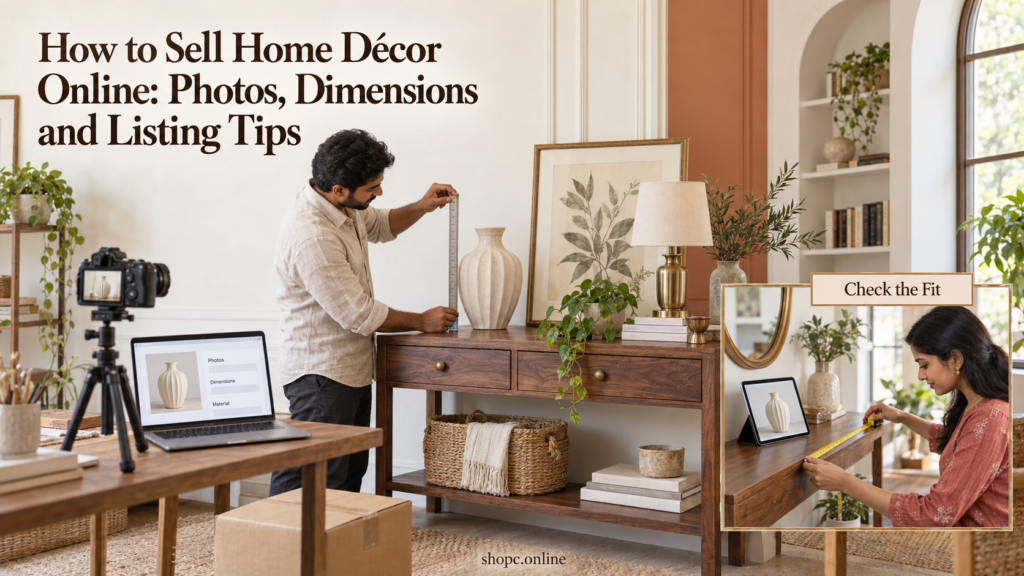
How to Sell Home Décor Online: Photos, Dimensions and Listing Tips
Learning to sell home décor online starts with helping customers picture the product in their own space. A wall hanging may look generous above a small console table but feel lost over a wide sofa. A decorative vase may be beautiful yet unsuitable for holding water.
Those are the details a good listing should explain before someone orders.
For a home accessories shop in Salem, a craft seller in Chennai or a small décor business in Coimbatore, photographs attract attention. Accurate measurements, clear material descriptions and useful delivery information help buyers make a decision.
This guide covers the information vendors should prepare and the checks customers can make before purchasing through ShopC.
Before You Sell Home Décor Online, Prepare a Product Record
Start with a small collection you can describe accurately. Choose products you can measure, photograph, pack and keep available.
Create one record for each item or variant. Include the product code, material, finish, dimensions, weight, package contents, stock quantity and care instructions. Record the packed dimensions separately for delivery planning.
Check the actual item against supplier information. A description prepared for an earlier batch may no longer match the colour, size or mounting arrangement.
For a one-of-a-kind piece, photograph that exact item. For repeat products, inspect new stock for differences before reusing the original listing.
10 Listing Tips to Sell Home Décor Online
1. Write a Title That Identifies the Product
A title should tell customers what the item is, rather than simply calling it beautiful.
A practical structure is:
Product type + verified material or finish + colour or design + useful size
Examples include:
- Cotton Cord Wall Hanging in Cream — 30 cm Wide.
- Blue Ceramic Decorative Vase — 20 cm High.
- Wooden Photo Frame for a 10 × 15 cm Photograph.
Use those descriptions only when they match the actual product.
If an item has a wood-effect finish, do not describe it as solid wood. If a decorative piece is gold-coloured, do not imply that it contains gold.
For a set, include the number of pieces. Keep the title focused enough to read easily on a phone.
2. Give Dimensions with Clear Labels
“Medium size” means different things to different buyers. Give the actual measurements and explain what each number represents.
Use labels such as width × height × depth, followed by the unit. Do not expect customers to guess what “30 × 45” means.
Different products need different measurements:
| Product | Useful measurements to include |
|---|---|
| Wall hanging | Overall width, total hanging height and decorative section height |
| Vase | Height, widest diameter, opening diameter and base diameter |
| Photo frame | Outer dimensions, intended photo size and visible opening |
| Cushion cover | Cover dimensions; confirm whether a cushion insert is included |
| Decorative tray | Outer dimensions, usable inner area and handle dimensions |
| Set of ornaments | Dimensions of each piece, with the quantity of each |
Measure wall hangings in their intended hanging position. Say whether the height includes the cord, tassels or fringe.
For handmade products, publish a dimensional variation range only after checking what your production process actually produces. Keep product measurements separate from shipping-box measurements.
3. Show Scale Without Distorting It
A styled room photograph helps buyers imagine placement, but it is not a substitute for measurements.
Show the product beside furniture or another familiar object while preserving its real proportions. Avoid digitally enlarging a small ornament to make it appear more impressive.
Add a separate image with width and height marked clearly. Place those measurements in the written description too, so customers do not have to rely on text inside a picture.
Buyers can mark out the stated dimensions on paper or measure the intended wall or shelf. A 30 cm-wide wall hanging will still be 30 cm wide regardless of how spacious the room looks in the photograph.
For sets, distinguish the size of each piece from the overall arrangement. State whether any suggested arrangement width includes gaps between pieces.
4. Photograph the Front, Back and Construction Details
A useful home décor photo set should answer more than “Does this look nice?”
| Photograph | Question it answers |
|---|---|
| Clear front view | What does the complete product look like? |
| Side or angled view | How deep or three-dimensional is it? |
| Back or underside | How is it finished, supported or hung? |
| Material close-up | What texture and surface detail should I expect? |
| Dimension image | Will it fit the intended space? |
| Styled scene | How might I use it at home? |
| Package-contents photo | What exactly will arrive? |
Use soft, even lighting and a simple background. Keep colours as close to the actual item as possible.
Show each colour or finish variant accurately. A beige selection should not display photographs of a white item without explanation.
If you use a digitally staged room, identify it as a visualisation and retain accurate product photographs. The staged image should not change the product’s texture, dimensions or included pieces.
5. Describe Materials, Finish and Intended Use
Customers cannot feel the surface or turn the item over, so describe the construction precisely.
Distinguish solid wood from engineered board, glass from acrylic, and metal from a metallic coating. Describe textile fibres only when their composition is verified.
Explain practical details that affect use. Does the vase hold water, or is it for dry arrangements only? Is the tray decorative, or has its suitability for serving food been established? Is the piece intended for indoor use?
Do not call a product weatherproof, washable, food-safe or heat-resistant without support for that claim.
A covered balcony can still expose an item to moisture and sunlight. Explain suitability using the manufacturer’s guidance or verified product information rather than assuming that all sheltered spaces are equivalent to indoors.
6. List Mounting Details and Everything Included
A buyer should not discover missing essentials only after unpacking.
For wall décor, show the hanging loop, bracket or rear fittings. State the item’s weight, the intended orientation and whether fixing hardware is included.
Mounting needs depend on the product and wall surface. Provide the manufacturer’s instructions where available; do not promise that one adhesive hook or fixing will suit every wall.
For other products, clarify whether the price includes:
- The frame and display stand.
- A cushion cover or a filled cushion.
- A planter, inner pot, plant or decorative stones.
- One ornament or a complete set.
- Assembly parts or tools.
Styled photographs often include flowers, candles or books. State when those props are excluded. For electrical décor, include verified power, cable and bulb details where relevant, including whether the pictured bulb is supplied.
7. Write Descriptions Around Real Buying Questions
The best home décor product descriptions combine a short overview with easy-to-find specifications.
Start with what the product is and what makes its design distinctive. Then explain the dimensions, material, finish, contents, intended use and care.
Compare these examples:
Vague: “Premium decoration that makes every room luxurious.”
Specific: “This cream cord wall hanging has a wooden hanging bar and a fringed lower edge. Check the overall dimensions, including the hanging cord, before choosing a position above a desk or console.”
Add accurate details instead of repeating “best home décor online.”
For images, use descriptive filenames and alt text. An example filename is cream-cord-wall-hanging-front.webp; matching alt text could be “Cream cord wall hanging with a wooden bar and fringed edge.”
Google’s image SEO guidance explains how descriptive image information helps search engines understand pictures and supports accessibility. Describe what is visible and avoid stuffing keywords into every image label.
8. Set Prices and Variants That Match the Order
Before you sell home décor online, calculate the costs of getting the item to a customer in suitable condition.
Include the product or making cost, your labour where relevant, protective packaging, agreed platform charges and any delivery cost you absorb. Account for other business expenses when assessing profitability.
Obtain delivery quotes using the fully packed dimensions and weight. A large, light wall decoration may require more packaging space than its product weight suggests.
For an illustrative order priced at ₹800, suppose the item costs ₹420, packaging costs ₹70, assumed selling charges are ₹60 and your delivery contribution is ₹80. That leaves ₹170 before other expenses and applicable taxes. These are sample figures, not ShopC fees.
Keep a separate stock code for each size, finish and set configuration. When a customer selects a variant, its photographs, dimensions, quantity and price should agree.
9. Pack for the Product and Explain Delivery Clearly
Inspect the item before packing. Check corners, surface finish, loose parts and the selected variant against the order.
Protect fragile components individually and prevent pieces from moving or rubbing together. Secure hanging cords and detachable parts. A gift box may still need protective outer packaging for transport.
Use packaging and carrier arrangements suitable for the product’s weight, shape and fragility. A “fragile” label does not replace protection.
For made-to-order décor, show preparation time separately from transit time. Confirm the design, dimensions and spelling of personalised text before production.
ShopC’s shipping policy states that availability depends on the customer’s pincode and the vendor’s delivery radius. Customers should check the estimate and charges for their particular address and order.
10. Make Returns and Product Care Easy to Find
Care advice should match the material and finish. A textile wall hanging, painted ornament and glass vase may need different treatment.
Use verified instructions. Do not automatically recommend washing or chemical cleaners for every decorative item.
Explain the applicable process for damaged, incorrect or otherwise eligible returns. The ShopC returns and refunds page states that eligibility can vary by product and vendor.
Customers should inspect the delivery promptly, keep their order details and retain packaging and photographs if there is a problem. For help, use the ShopC contact page.
Confirm any applicable conditions for personalised products before the order is placed. Avoid promising that every purchase qualifies for a return.
A Five-Minute Check Before Publishing
Open the draft listing on a phone and compare it with the item in front of you. Select every available variant and make sure the image, price and specifications change together where required.
Ask someone who has not seen the product to describe what they think they will receive. If they expect a larger item, extra pieces or included mounting hardware, identify which photograph or sentence caused the misunderstanding.
Check the numbers across the title, dimension image, description and specification table. A corrected measurement should be updated everywhere it appears, including any translated version of the listing.
Finally, confirm that the stock count is current and that the delivery information applies to this item. Save your measurement and packing records so another team member can answer questions consistently. This review is especially useful when several people photograph, write and upload products.
Sample Home Décor Listing
This is a fictional example showing a useful listing structure. Its measurements, materials and other details are not specifications for an existing ShopC product.
Cream Cotton Cord Wall Hanging — 30 cm Wide
This cream wall hanging combines knotted cotton cord with a wooden hanging bar and a fringed lower edge. It is intended for indoor decorative use.
The overall hanging height is 50 cm, including the suspension cord. The decorative section below the bar measures 35 cm, including the fringe. Use these measurements to check your available wall space.
| Product detail | Illustrative information |
|---|---|
| Main materials | Cotton cord and a wooden bar |
| Colour | Cream |
| Overall width | 30 cm, including the bar |
| Overall hanging height | 50 cm, including the suspension cord |
| Decorative section height | 35 cm below the bar, including fringe |
| Approximate maximum depth | 2 cm |
| Product weight | 180 g |
| Contents | One wall hanging with attached suspension cord |
| Wall fixing | Not supplied |
| Intended use | Indoor decoration |
| Care | Follow the material-specific instructions supplied |
For a real listing, verify every field and add the price, current availability, care instructions, dispatch information and applicable return conditions. Do not copy the sample measurements into another product.
What Customers Should Check Before Buying Home Décor Online
Measure the Intended Space
Check the wall, shelf or tabletop before choosing a size. For items inside a cabinet, consider usable depth and door clearance as well as height.
For wall pieces, look at total hanging height. For frames, distinguish the photograph size from the outer frame size.
Compare Materials and Finish
“Wood-look” and “solid wood” describe different things. Check the listed material, surface finish and close-up photographs.
If a detail matters to your decision and is missing, ask before ordering.
Check the Quantity and Accessories
Confirm whether the photograph shows one item, a set or several separately sold products. Read whether plants, inserts, hanging hardware and styling props are included.
Confirm Use, Timing and Total Cost
Check indoor or outdoor suitability, water-holding capability where relevant, preparation time, delivery charges and the final payable amount.
If the item is for a housewarming gift, allow time for delivery and inspection. Check whether gift packaging is actually offered.
Read the Return Conditions
Save the order confirmation and review the product-specific conditions. Contact support promptly if the item arrives damaged or differs from the order.
Customers can browse ShopC’s Decoration category and compare the details of individual listings.
Prepare Your First Listings on ShopC
Review the ShopC vendor registration page and confirm the requirements for your business and product category. Ask about current fees, payout terms, delivery arrangements and return responsibilities.
Once approved and ready to list, begin with products for which you have complete information. Check the correct category and preview each page on a phone.
Ask someone unfamiliar with the product to answer five questions from the listing alone:
- What exactly am I buying?
- How large and heavy is it?
- What is it made from?
- What will I need to display or use it?
- When can it arrive, and where can I find help?
Fill any information gaps before sharing the product link.
Improve Listings Using Customer Questions
Keep a simple note of repeated questions, cancellations and return reasons. Review whether the information on the page was missing, unclear or inconsistent.
“Smaller than expected” may suggest that the scale photograph or dimensions need improvement. Questions about hanging may mean the rear fittings are not visible.
Correct the relevant detail and update the photographs when needed. This gives your next customer a clearer explanation while helping your team spend less time answering the same question.
Frequently Asked Questions
How Can Beginners Sell Home Décor Online?
Start with a manageable collection, verify product details, take accurate photographs and plan suitable packaging. Review marketplace terms and delivery arrangements before accepting orders.
Which Dimensions Should a Home Décor Listing Include?
Provide labelled measurements relevant to the product, such as width, height, depth or diameter. Explain whether cords, frames, handles or fringe are included in those figures.
Can I Use Supplier Photographs?
Use them only with permission and after checking that they accurately represent your stock. Add your own detail and scale photographs when the supplied images leave questions unanswered.
Can I Use Styled Room Mockups?
They can help explain placement if clearly identified as visualisations. Keep realistic scale and provide photographs of the actual item so customers can inspect its appearance.
How Do I Describe Handmade Variations?
Explain the specific variations customers may receive, such as slight differences in pattern placement. Use representative photographs and verified measurement ranges. Do not describe damage or poor finishing as normal handmade variation.
Is Every Decorative Vase Suitable for Fresh Flowers?
Do not assume it holds water. Sellers should confirm the intended use; customers should look for that information before purchasing.
Help Customers Picture the Product Accurately
To sell home décor online, make the product easy to understand before it arrives. Show its size honestly, describe its materials and explain what comes with it.
For vendors: Review ShopC’s seller registration requirements and prepare your first complete listings.
For customers: Explore home décor on ShopC and check measurements, materials and delivery details before ordering.
More from the blog

Selling Packaged Food Online: 10 Essential Seller Checks
Selling packaged food online? Check FSSAI requirements, labels, allergens, shelf life, packaging and…
View more →
How to Sell Clothing Online: 10 Smart Listing Tips
Learn how to sell clothing online with accurate size charts, clear photos and useful product details…
View more →
How to Sell Handmade Jewellery Online: 10 Easy Steps
Learn how to sell handmade jewellery online with practical tips on pricing, photos, product descript…
View more →