
How to Clean Brass Diya at Home: Easy Methods That Work
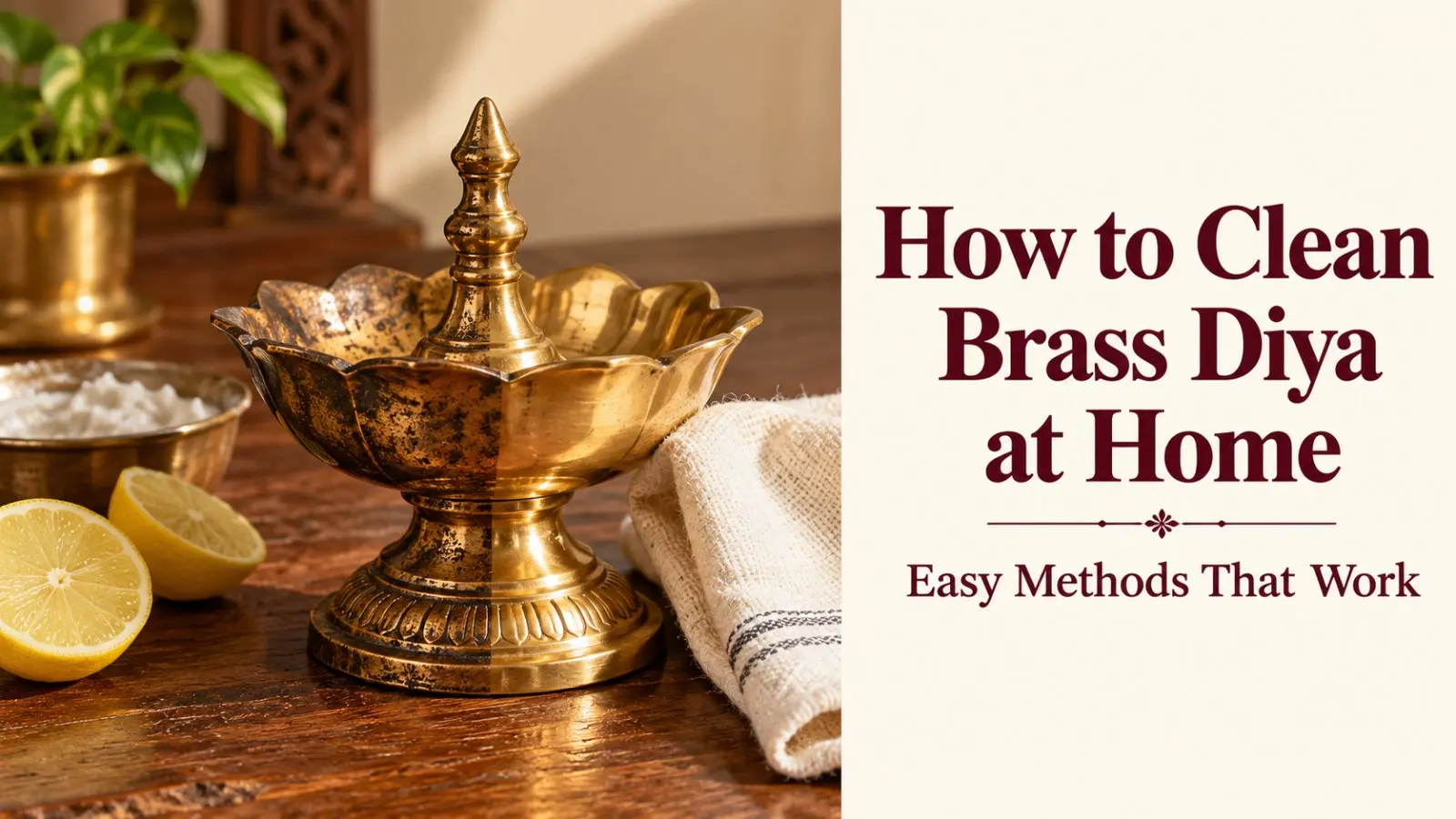
A brass diya that has been lit every evening for a month looks very different from the one you bought. Oil seeps into the grooves, soot gathers near the wick and the bright gold colour turns dull brown. The good news is that you do not need a special chemical to fix it. If you know how to clean brass diya properly, a few things from your kitchen will bring the shine back.
Below are seven methods, from a quick weekly wash to a deep clean before a festival.
Table of Contents
Why brass diyas turn dark
Brass is an alloy of copper and zinc. When it meets air and moisture, the surface slowly oxidises and forms a dull layer called tarnish. Add oil, soot and heat from daily use, and you get sticky black patches around the wick holder. Regular cleaning removes this layer before it hardens.
Before you start
- Let the diya cool fully and remove any leftover wick.
- Pour out the remaining oil into a small cup if you want to reuse it for the next lighting.
- Wipe the inside with old newspaper to remove most of the oil. This makes every method below work faster.
How to clean brass diya: 7 easy ways
1. Tamarind (puli)
This is the method most grandmothers swear by. Soak a small ball of tamarind in warm water for ten minutes. Rub the pulp all over the diya, leave it for five minutes, then scrub with a soft brush and rinse. The natural acid lifts tarnish gently.
2. Lemon and salt
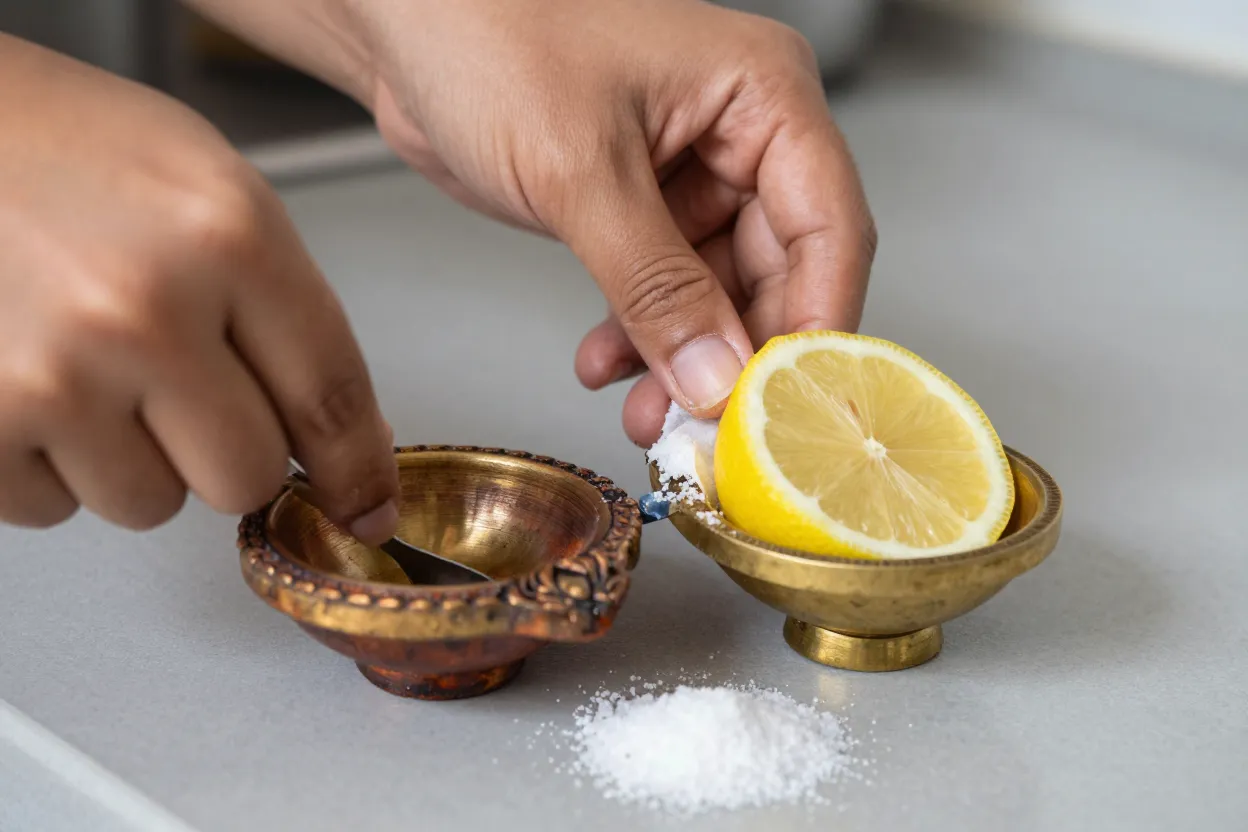
Cut a lemon in half, dip it in salt and rub it on the dark patches. Rinse with warm water and dry immediately. It is quick and works well for weekly cleaning.
3. Vinegar, salt and flour paste
Mix equal parts white vinegar and salt, then add wheat flour to make a thick paste. Spread it on the diya, leave for 15 to 20 minutes, rinse and buff dry. This suits heavily tarnished lamps.
4. Hot water and dish soap for oil
For a diya that is mostly greasy rather than tarnished, soak it in hot water with a few drops of dishwash liquid for 15 minutes. Scrub with a soft brush. Our local sellers’ dishwash gels and natural scrubbers are handy for this.
5. Wood ash
In many villages, cooled wood ash from the kitchen was used as a mild scrub. It removes soot and oil without scratching. Rinse well afterwards.
6. Baking soda paste
Mix baking soda with a little water and scrub the black areas around the wick holder. Good for soot that does not come off with soap.
7. Tomato ketchup or sour curd
It sounds odd, but both contain mild acids. Coat the diya, wait ten minutes and rinse. Useful when you have no tamarind or lemon at home.
Quick comparison
| Method | Best for | Time |
|---|---|---|
| Tamarind | General tarnish | 15 minutes |
| Lemon and salt | Weekly cleaning | 5 minutes |
| Vinegar paste | Heavy dark stains | 25 minutes |
| Hot soapy water | Oil and grease | 20 minutes |
| Baking soda | Soot near the wick | 10 minutes |
Brass cleaning tips that protect the shine
- Dry immediately. Water spots turn into new marks. Wipe with a dry cotton cloth, then leave it in the sun for a few minutes.
- Avoid steel scrubbers on polished or carved surfaces. They leave scratches that collect more dirt.
- Clean little and often. A two-minute wipe after every use is easier than a big scrub once a month.
- Store in a dry place. Wrap festival lamps in cloth before putting them away.
- Check for lacquer. Some decorative brass items have a clear coat. Acidic cleaners can damage it, so use only mild soap on those.
When to clean before a festival
Plan to clean your lamps two or three days before festivals like Navaratri, Karthigai Deepam or Deepavali. That leaves time for a second round if a stain is stubborn. Clean the kuthu vilakku, small diyas, aarti plate and kalasam together so the pooja corner looks bright on the day.
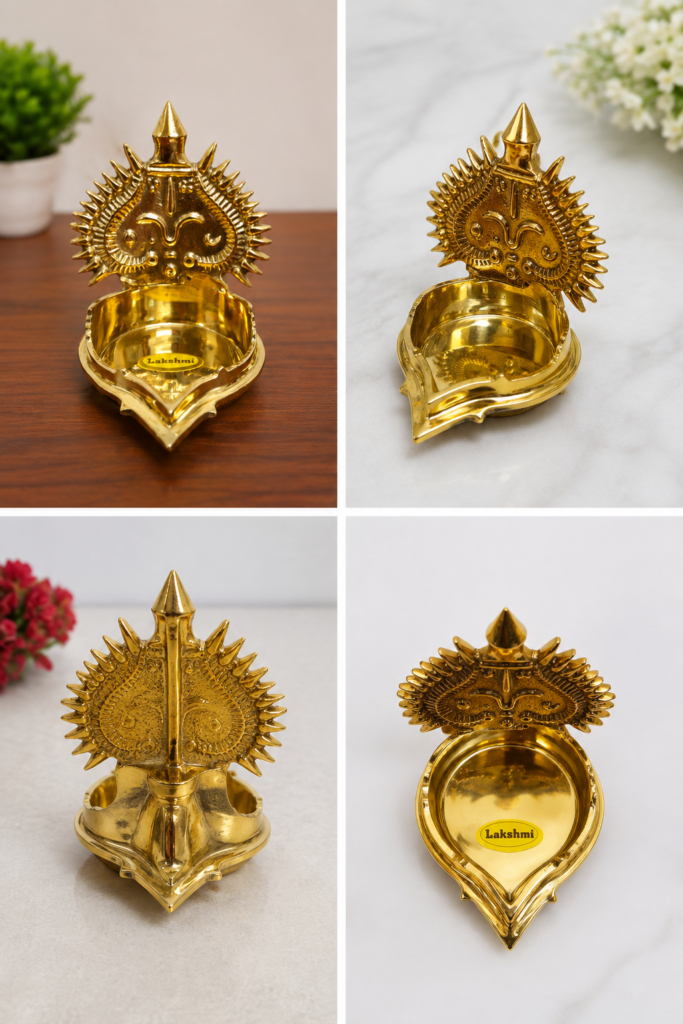
If an old diya is cracked or the base wobbles, it may be time for a new one. You can find brass diyas and diya stands from Tamil Nadu sellers on ShopC.
To understand more about the metal itself, see this explanation of brass on Wikipedia.
Daily care for brass lamps
The easiest way to avoid a big monthly scrub is a few seconds of care after every use. Once the lamp cools, wipe the inside with a piece of newspaper to remove leftover oil. Remove burnt wick pieces before they stick to the metal. Once a week, give it a quick lemon and salt clean.
If you clean brass lamps regularly, the dark layer never gets thick enough to need strong methods. This saves time and also protects carvings and engravings from heavy scrubbing.
Mistakes to avoid
- Leaving the diya wet after washing, which causes new spots.
- Using strong acids or toilet cleaners, which can damage the metal.
- Soaking lacquered decorative pieces in vinegar.
- Cleaning a lamp while it is still warm, which can burn your fingers.
Once you know how to clean brass diya safely, you can apply the same steps to your kalasam, aarti plate, bell and other brass pooja items.
How often should you clean brass lamps?
For lamps lit every day, a quick wipe after use and a proper clean once a week is ideal. Festival lamps used a few times a year only need a thorough clean before and after each festival. If you clean brass lamp surfaces gently and regularly, you will rarely need the stronger vinegar or flour paste methods. A simple routine is the easiest answer to how to clean brass diya without stress.
Frequently asked questions
Once you know how to clean brass diya with simple kitchen items, the job takes only a few minutes. A little care each week keeps your lamps glowing for years.
What is the fastest way to clean a brass diya?
Rub it with half a lemon dipped in salt, rinse with warm water and dry immediately. It takes about five minutes.
How do I remove black soot from a brass lamp?
Soak the lamp in hot soapy water, then scrub the dark area with a baking soda paste and a soft brush.
Can I use a steel scrubber on brass?
It is better to avoid it on polished or carved brass, as it can leave fine scratches. Use a soft brush or cloth instead.
More from the blog
Cotton Saree Care in Monsoon: Wash, Dry and Store the Right Way
Simple cotton saree care tips for the rainy season: gentle washing, how to dry cotton sarees indoors…
View more →
Protect Phone in Rain: Simple Monsoon Phone Care Tips at Home
Learn how to protect phone in rain with a mobile rain cover, simple monsoon phone care habits, wet p…
View more →
Herbal Tea for Rainy Days: Warm Drinks for Monsoon Evenings
Herbal tea for rainy days: how to brew hibiscus tea, blue pea tea and sukku malli coffee at home, wi…
View more →