
Pooja Items List for Home: A Simple Checklist for Daily Worship
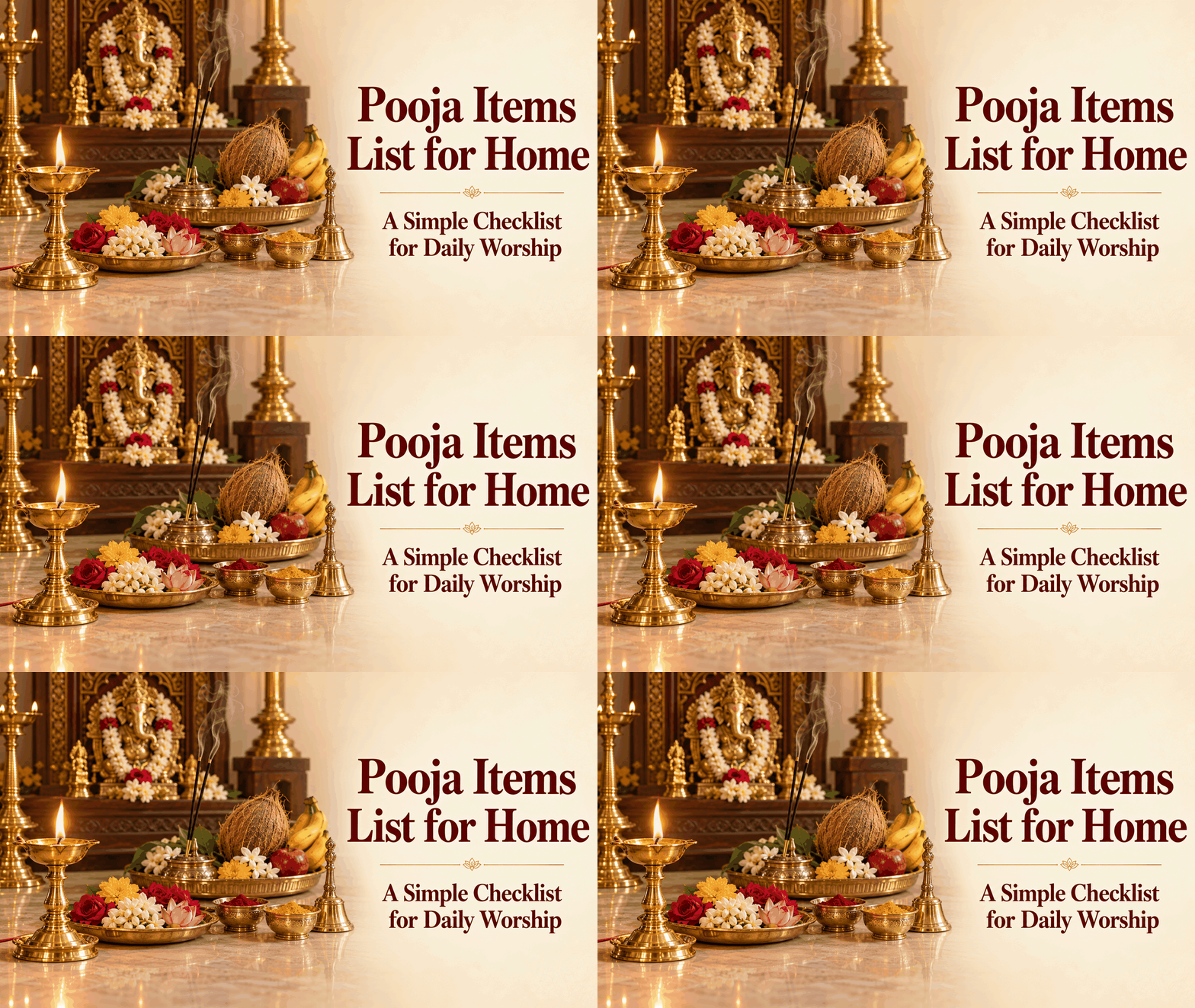
A pooja corner does not need to be large. Some of the most peaceful ones are a single shelf in a kitchen or a small wooden mandir in a flat. What matters is that the things you need are within reach every morning. This pooja items list for home covers the basics most Tamil households use, with notes on what to buy first.
Customs differ from family to family and temple to temple, so treat this as a practical checklist rather than a rule book.
Table of Contents
Why a pooja items list for home helps
When you set up a new home, or when a family member takes over the daily pooja, it is easy to miss small things like wicks or camphor. A list keeps the pooja corner stocked and stops repeated trips to the shop. It also helps you buy good quality items once, instead of cheap replacements every few months.
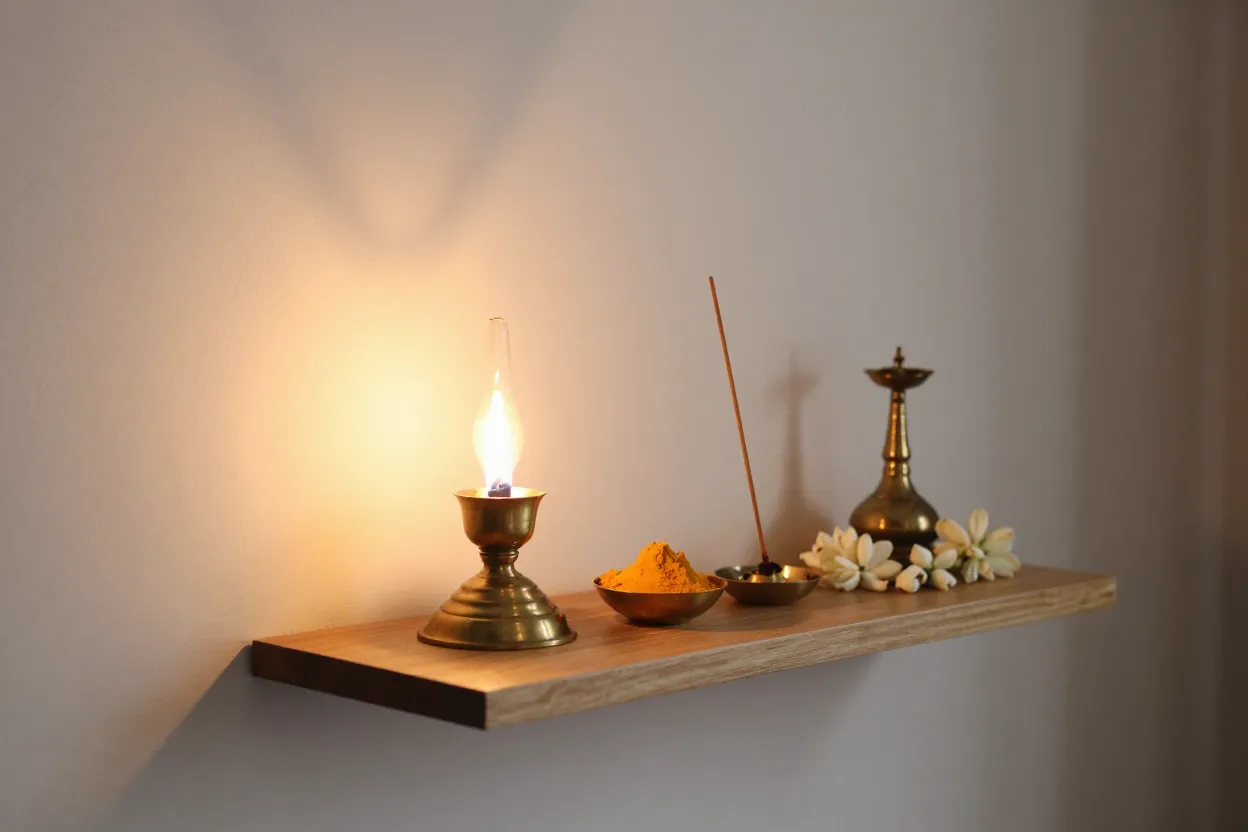
The 18 pooja essentials
Lamps and light
- Kuthu vilakku or brass diya: the main lamp, lit every morning and evening.
- Cotton wicks: keep a packet of plain cotton wicks and a few red wicks for special days.
- Lamp oil or ghee: many families use gingelly oil for daily lighting and ghee on festival days.
- Camphor (karpooram): for aarti at the end of the pooja.
- Aarti plate: a small brass or steel plate to hold camphor.
Fragrance
- Agarbatti (incense sticks): choose a mild fragrance for daily use.
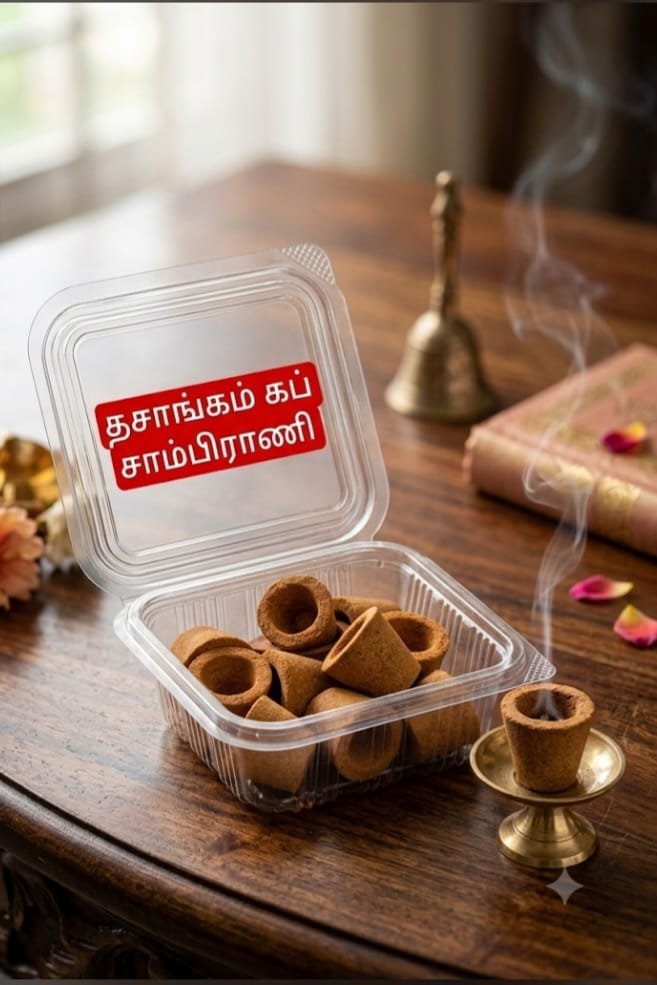
- Sambrani: cup sambrani or sambrani powder is used on Fridays and festival days in many homes. You can find cup sambrani and dhoop from local sellers on ShopC.
- Incense stand: catches the ash and keeps the shelf clean.
Colours and offerings
- Kumkum: for the deities and for guests.
- Turmeric (manjal): whole turmeric or powder for the threshold and offerings.
- Sandal paste (chandanam): a small container of sandal powder mixed fresh.
- Akshatai: rice mixed with turmeric for blessings.
- Flowers: jasmine, marigold, hibiscus or tulsi leaves, depending on the deity.
- Fruits and naivedyam: bananas, a coconut on special days, or a little sugar candy.
Tools
- Bell (mani): rung during aarti.
- Small kalasam or water pot (panchapathram): with a spoon (uddharani) for offering water.
- Matchbox and lighter: kept in a closed tin away from the lamp.
- A clean cloth: for wiping the shelf and idols.
What to buy first
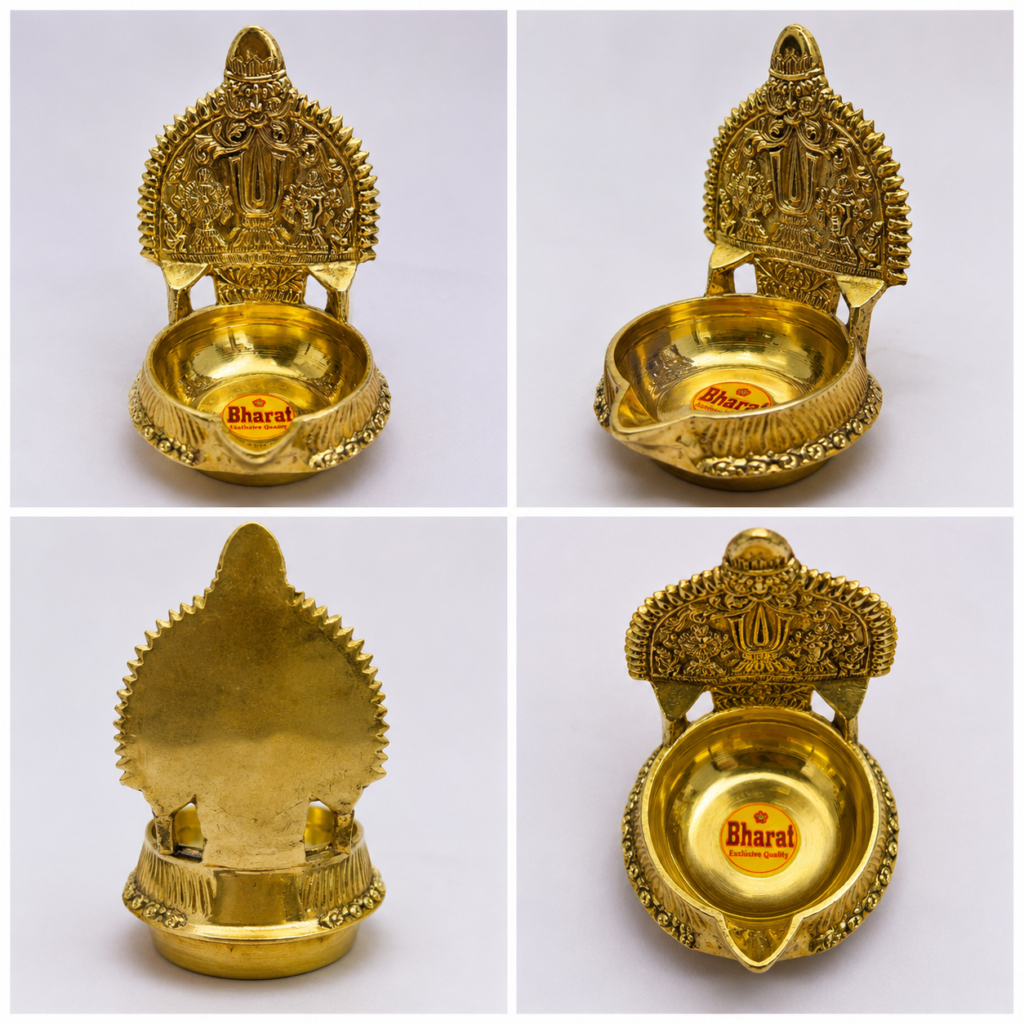
If you are setting up a pooja corner from scratch, start with these five: a brass diya, wicks, oil, camphor and agarbatti. Add kumkum and turmeric next. The rest can come over a few weeks.
| Priority | Items |
|---|---|
| Day one | Diya, wicks, oil, camphor, matchbox |
| First week | Kumkum, turmeric, agarbatti, bell |
| First month | Kalasam, aarti plate, sambrani, sandal powder |
| Festivals | Ghee, garlands, special lamps, idols |
How to choose good quality pooja items
- Brass items: heavier pieces usually last longer. Check that the base sits flat.
- Kumkum and turmeric: buy small packs and store them in airtight containers so they stay fresh.
- Wicks: pure cotton wicks burn evenly with less smoke.
- Sambrani and dhoop: try one pack first to see if the fragrance suits your home.
Many small makers in Tamil Nadu produce sambrani, dhoop, lamps and malas by hand. Buying from them through ShopC’s local marketplace is an easy way to support their work.
Keeping your pooja corner clean
Wipe the shelf every day. Remove old flowers in the evening so they do not attract ants. Clean brass lamps once a week with tamarind or lemon and salt, then dry them fully. A soft brush and a dry cotton cloth are all you need.
Keep camphor and oil away from the flame and never leave a lit lamp alone near curtains.
Pooja items for festival days
On festivals like Navaratri, Karthigai Deepam and Deepavali, you may need extras:
- More diyas or agal vilakku for rows of lights
- Fresh garlands and mango leaves for the doorway
- Thamboolam items for guests
- Special naivedyam ingredients like jaggery, rice and ghee
Planning these a week early saves stress on the festival morning. For Navaratri, see our golu items list.
To read about the history of puja as a practice, see this overview of puja on Wikipedia).
How to set up a pooja corner in a small flat
Many city flats do not have a separate pooja room. A wall-mounted wooden mandir, a single kitchen shelf or a corner of the living room works well. Choose a clean, quiet spot that is not next to the bathroom or the shoe rack, and keep it at a height where the lamp is easy to light.
- Line the shelf with a washable cloth or a brass plate.
- Keep oil, wicks and camphor in a small closed box nearby.
- Use a separate cloth to clean idols and lamps.
- Fix a small hook or tray for the matchbox so it never sits next to the flame.
When you write your own pooja items list for home, add the things your family uses on special days, such as a particular sambrani, a mala or a specific flower.
Daily pooja items vs festival pooja items
Your daily pooja items are small and simple: lamp, wicks, oil, camphor, agarbatti, kumkum and a few flowers. Festival items add lamps, garlands, thamboolam and special naivedyam. Keeping the two lists separate means you restock the daily pooja essentials every month and shop for festival items only when needed.
Review your pooja essentials once a month and restock anything that is running low before it runs out.
Frequently asked questions
A calm pooja corner starts with a few good basics. Keep this pooja items list for home handy, refill as you go, and let the space grow with your family.
What are the basic pooja items needed at home?
A lamp, cotton wicks, oil or ghee, camphor, agarbatti, kumkum, turmeric, flowers and a bell cover most daily pooja needs.
Which oil is used for the pooja lamp?
Many families use gingelly (sesame) oil for daily lighting and ghee on festival days. Follow your family custom.
How often should brass pooja items be cleaned?
A quick wipe daily and a proper clean with tamarind or lemon once a week keeps them bright.
More from the blog
Cotton Saree Care in Monsoon: Wash, Dry and Store the Right Way
Simple cotton saree care tips for the rainy season: gentle washing, how to dry cotton sarees indoors…
View more →
Protect Phone in Rain: Simple Monsoon Phone Care Tips at Home
Learn how to protect phone in rain with a mobile rain cover, simple monsoon phone care habits, wet p…
View more →
Herbal Tea for Rainy Days: Warm Drinks for Monsoon Evenings
Herbal tea for rainy days: how to brew hibiscus tea, blue pea tea and sukku malli coffee at home, wi…
View more →