
Cold Pressed Oil vs Refined Oil: How They Differ and How to Choose
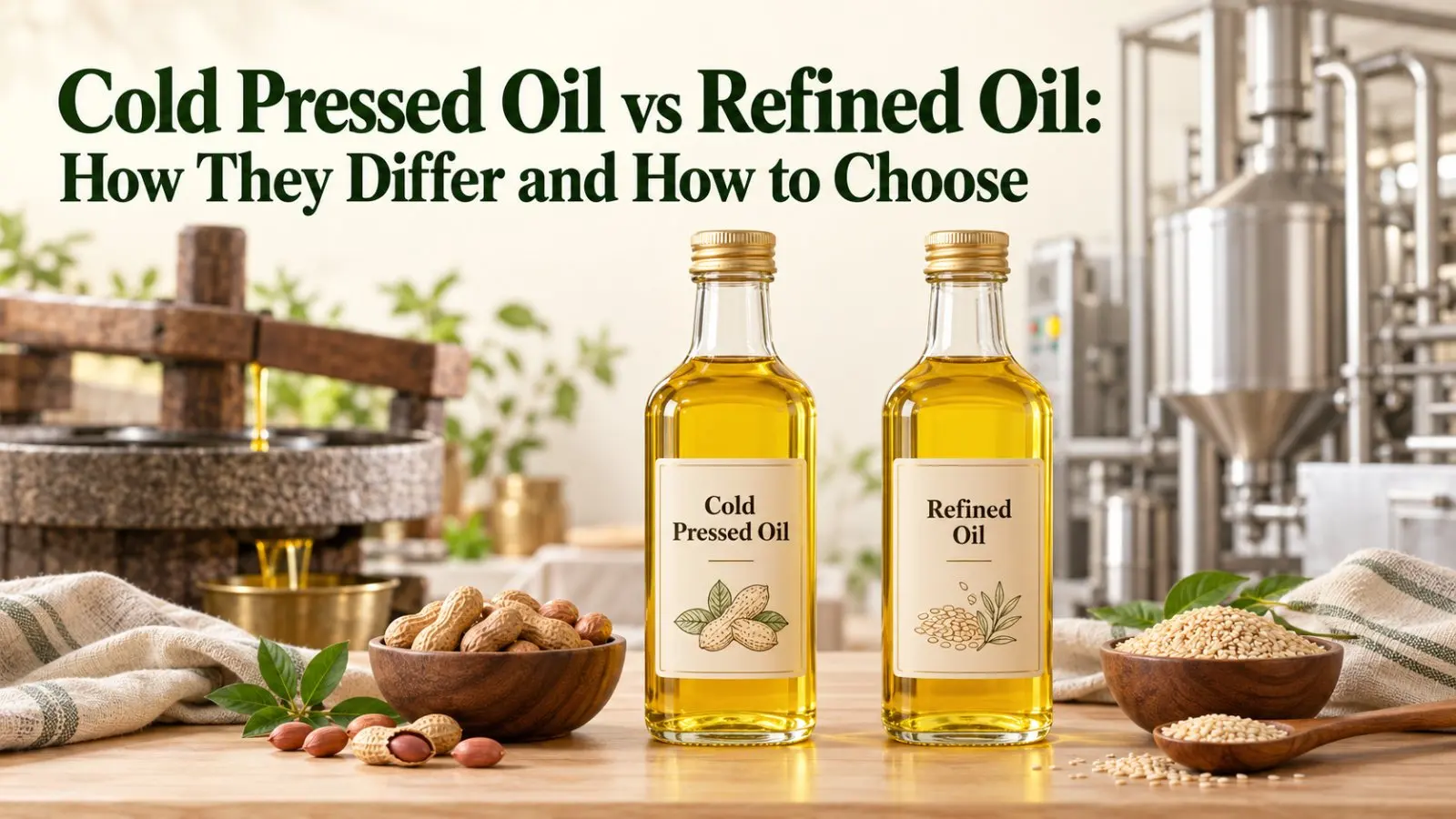
Cooking oil is one of those things most families buy every month without thinking. Then someone mentions “marachekku ennai” and suddenly everyone is asking whether to switch. The debate around cold pressed oil vs refined oil is mostly about how the oil is made, and that changes its taste, colour, cooking behaviour and price.
This guide explains the differences in plain language. For specific health questions, please speak to your doctor or a qualified nutritionist.
Table of Contents
What is cold pressed oil?
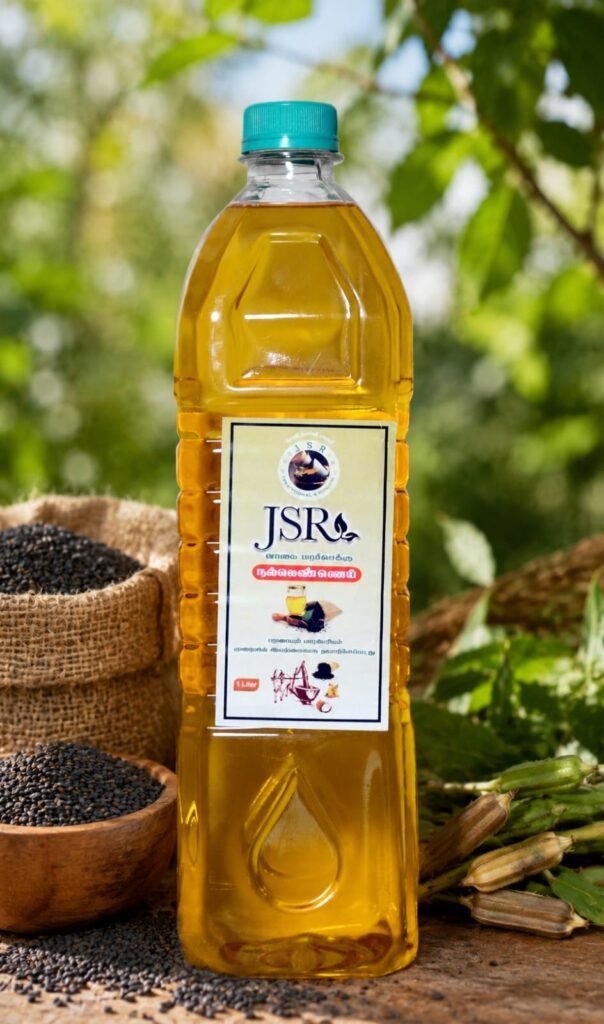
Cold pressed oil is extracted by crushing seeds such as groundnut, sesame or coconut in a press without adding high heat or chemical solvents. In Tamil Nadu, the traditional version is the wooden press called marachekku or chekku, where a heavy pestle slowly turns inside a wooden mortar. The oil is then filtered, often by letting it settle naturally.
What is refined oil?
Refined oil goes through additional industrial steps after extraction. These can include solvent extraction, degumming, neutralising, bleaching and deodorising. The result is a clear oil with a neutral smell and taste that stays stable on the shelf for a long time. You can read about these processes in this overview of cooking oil refining on Wikipedia.
Cold pressed oil vs refined oil: 7 differences
1. Method
Cold pressed oil is mechanically pressed at low temperature. Refined oil is processed with heat and other steps after extraction.
2. Colour and clarity
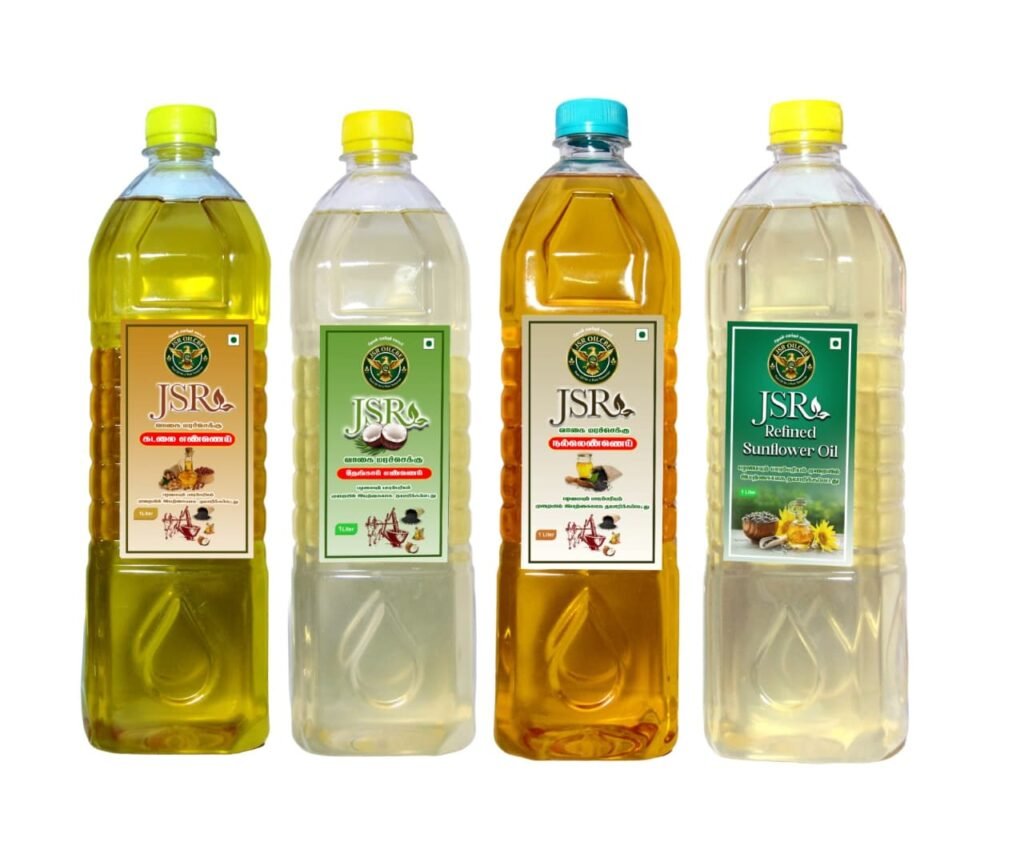
Cold pressed groundnut or sesame oil is usually golden with a natural haze or slight sediment. Refined oil is light and crystal clear.
3. Smell and taste
Cold pressed oils keep the aroma of the seed. Gingelly oil smells nutty, groundnut oil smells of roasted peanuts. Refined oils have almost no smell, which some people prefer for baking or deep frying.
4. Smoke point
Refined oils generally have a higher smoke point, which makes them convenient for high-heat frying. Cold pressed oils are well suited to everyday Indian cooking at medium heat, tempering and dressing.
5. Processing and additives
Cold pressed oil is minimally processed. Refined oil may contain permitted additives such as antioxidants or added vitamins. Read the label on each pack.
6. Shelf life and storage
Cold pressed oils usually have a shorter shelf life and should be stored in a cool, dark place. Refined oils last longer on the shelf.
7. Price
Cold pressed oil costs more because the seed-to-oil yield is lower and the process is slower. Refined oil is cheaper per litre.
Side-by-side comparison
| Feature | Cold pressed oil | Refined oil |
|---|---|---|
| Extraction | Mechanical, low heat | Industrial, heat and processing |
| Colour | Golden, may be cloudy | Clear, pale |
| Aroma | Natural seed aroma | Neutral |
| Best for | Daily cooking, tempering, podi, pickles | Deep frying, baking |
| Shelf life | Shorter | Longer |
| Price | Higher | Lower |
Which oils are commonly cold pressed in Tamil Nadu?
- Gingelly (sesame) oil: used for tempering, pickles, idli podi and the Deepavali oil bath.
- Groundnut oil: an all-round cooking oil in many Tamil homes.
- Coconut oil: used in cooking in some regions and widely for hair care.
How to choose and use them
- Many families use cold pressed oil for daily cooking and keep a small bottle of refined oil for deep frying.
- Match the oil to the dish: gingelly for podi and pickles, groundnut for frying vadai, coconut for coastal dishes.
- Buy smaller bottles of cold pressed oil so you finish them while fresh.
- Store away from the stove, in a closed steel or glass container.
How to spot genuine cold pressed oil
- Check the label for “cold pressed”, “wood pressed” or “chekku”.
- Expect natural aroma and colour, with a little sediment at the bottom.
- Buy from sellers who state the source of seeds and the pressing method.
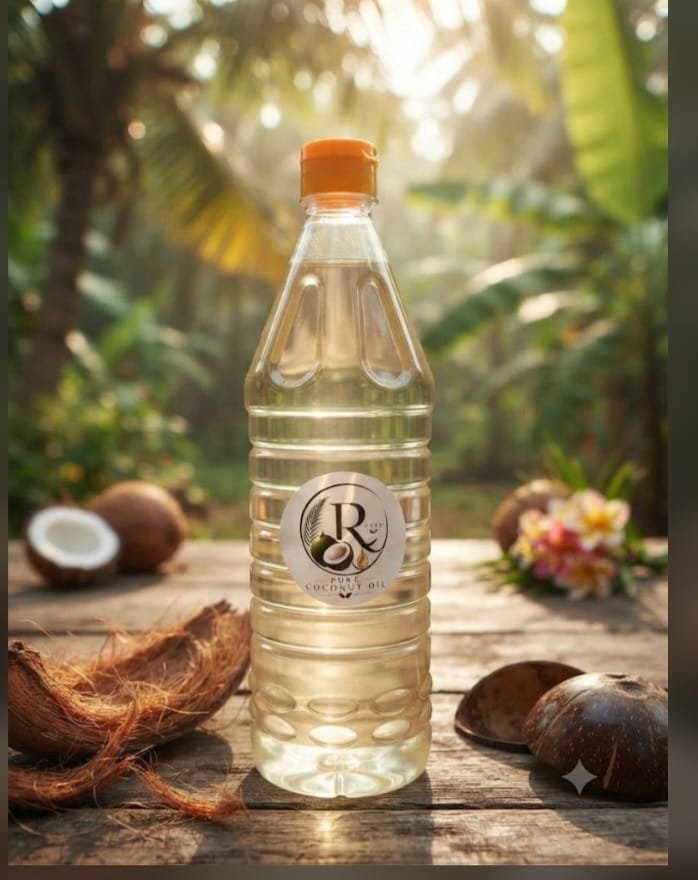
On ShopC, you can buy groundnut, sesame and coconut oils from local mills and sellers in Tamil Nadu. Pair gingelly oil with our idli podi varieties for a classic breakfast.
A simple way to switch
If you want to try cold pressed oil, start with one dish, such as tempering for sambar or the oil for idli podi. Notice the aroma and taste. Many families then move one or two daily-use oils to cold pressed varieties and keep a refined oil only for deep frying.
- Start with a 500 ml bottle so it stays fresh.
- Keep the bottle away from sunlight and the stove.
- Check the date of pressing on the label.
Questions to ask the seller
- Which seeds are used, and where do they come from?
- Is it wood pressed, cold pressed in a machine, or expeller pressed?
- When was the oil pressed?
- Is anything added, such as preservatives or other oils?
Clear answers help you compare products fairly and pick the oil that suits your kitchen best.
Popular cold pressed oils and their uses
- Gingelly (sesame) oil: idli podi, pickles, kuzhambu and the Deepavali oil bath.
- Groundnut oil: everyday cooking, poriyal and frying vadai or bajji.
- Coconut oil: Kerala-style dishes, avial and some sweets.
Many families in Tamil Nadu buy wood pressed oil from a local chekku in their town. The marachekku oil you get there is often pressed fresh in front of you.
Wood pressed oil and marachekku oil: are they the same?
In Tamil Nadu, wood pressed oil and marachekku oil usually mean the same thing: oil extracted in a traditional wooden press. “Cold pressed” is a broader term that can also include oil pressed in steel machines at controlled temperatures. When you compare cold pressed oil vs refined oil, wood pressed oil sits at the most traditional end. Ask your seller whether their marachekku oil is pressed in wood or steel, so you know exactly what you are buying.
Frequently asked questions
Understanding cold pressed oil vs refined oil helps you choose what suits your cooking, taste and budget.
What is the main difference between cold pressed oil and refined oil?
Cold pressed oil is mechanically pressed at low temperature with minimal processing, while refined oil goes through further industrial steps that make it clear and neutral in taste.
Can cold pressed oil be used for deep frying?
Many families do use groundnut oil for frying, but refined oils usually handle very high heat better. Check the label and avoid heating any oil until it smokes.
Why is cold pressed oil cloudy?
Fine seed particles remain in naturally filtered oil. A little haze or sediment is normal.
More from the blog
Cotton Saree Care in Monsoon: Wash, Dry and Store the Right Way
Simple cotton saree care tips for the rainy season: gentle washing, how to dry cotton sarees indoors…
View more →
Protect Phone in Rain: Simple Monsoon Phone Care Tips at Home
Learn how to protect phone in rain with a mobile rain cover, simple monsoon phone care habits, wet p…
View more →
Herbal Tea for Rainy Days: Warm Drinks for Monsoon Evenings
Herbal tea for rainy days: how to brew hibiscus tea, blue pea tea and sukku malli coffee at home, wi…
View more →