
Idli Podi Varieties: Tasty Types to Try with Idli and Dosa
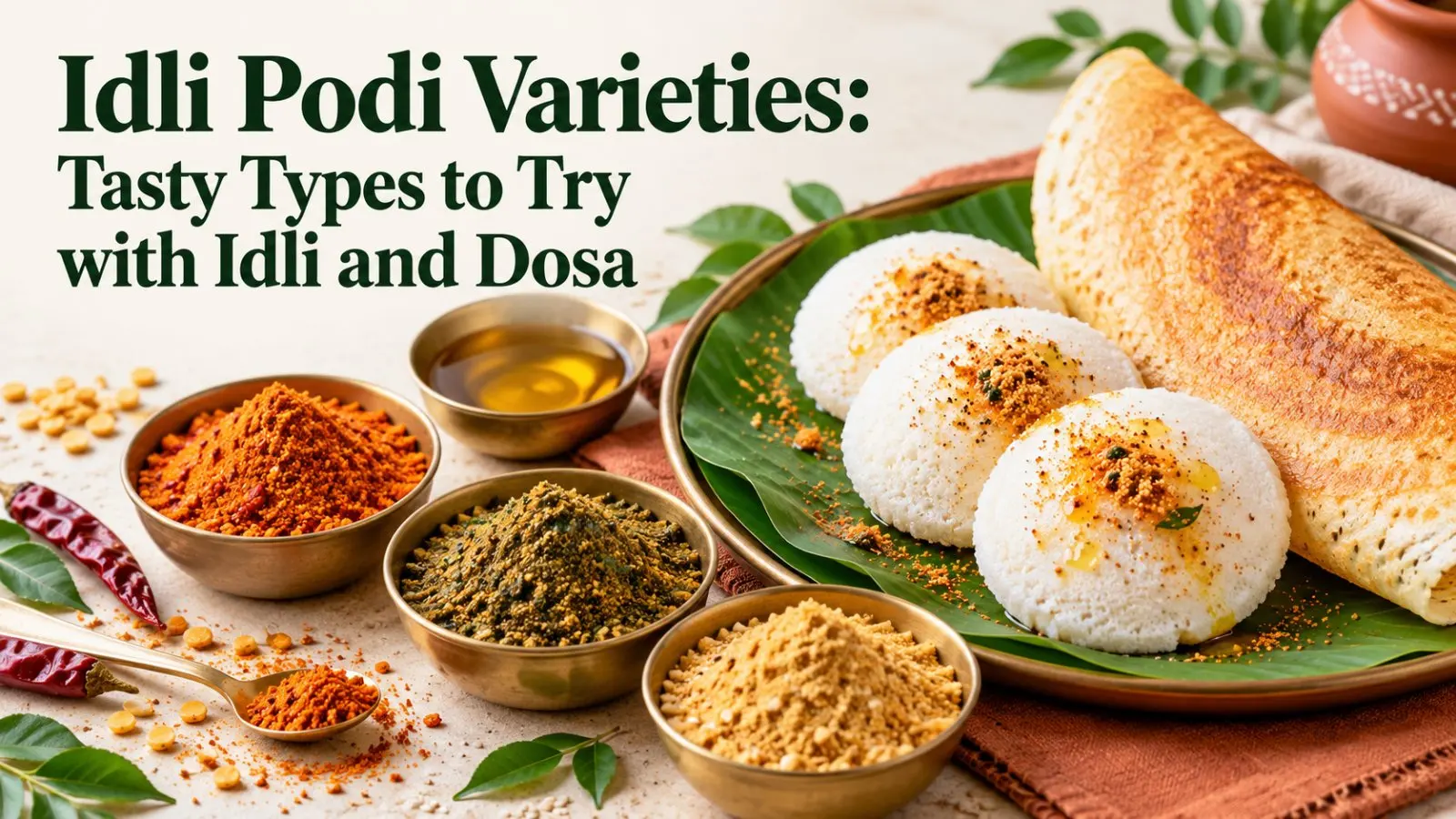
In many Tamil homes, the podi jar is the quiet hero of the kitchen. When there is no time for chutney or sambar, a spoon of podi with gingelly oil turns plain idli or dosa into a full meal. Most people grow up with one family recipe, but there are many idli podi varieties worth trying, each with its own flavour and use.
Here are eight popular types, how they differ and how to enjoy them.
Table of Contents
What is idli podi?
Idli podi, also called milagai podi or “gun powder”, is a dry spice powder made by roasting lentils, dried red chillies and spices, then grinding them coarsely. It is mixed with oil or ghee and eaten with idli, dosa, uthappam and even curd rice. Every household has its own balance of heat, salt and crunch.
8 idli podi varieties to try
1. Classic milagai podi
Made with urad dal, chana dal, red chillies, sesame seeds, asafoetida and salt. This is the everyday podi most families keep. Adjust the chillies to taste.
2. Moringa leaf (murungai keerai) podi
Dried drumstick leaves are roasted with lentils and chillies. It has a slightly earthy flavour and a lovely green tint. It is a good way to add greens to breakfast.
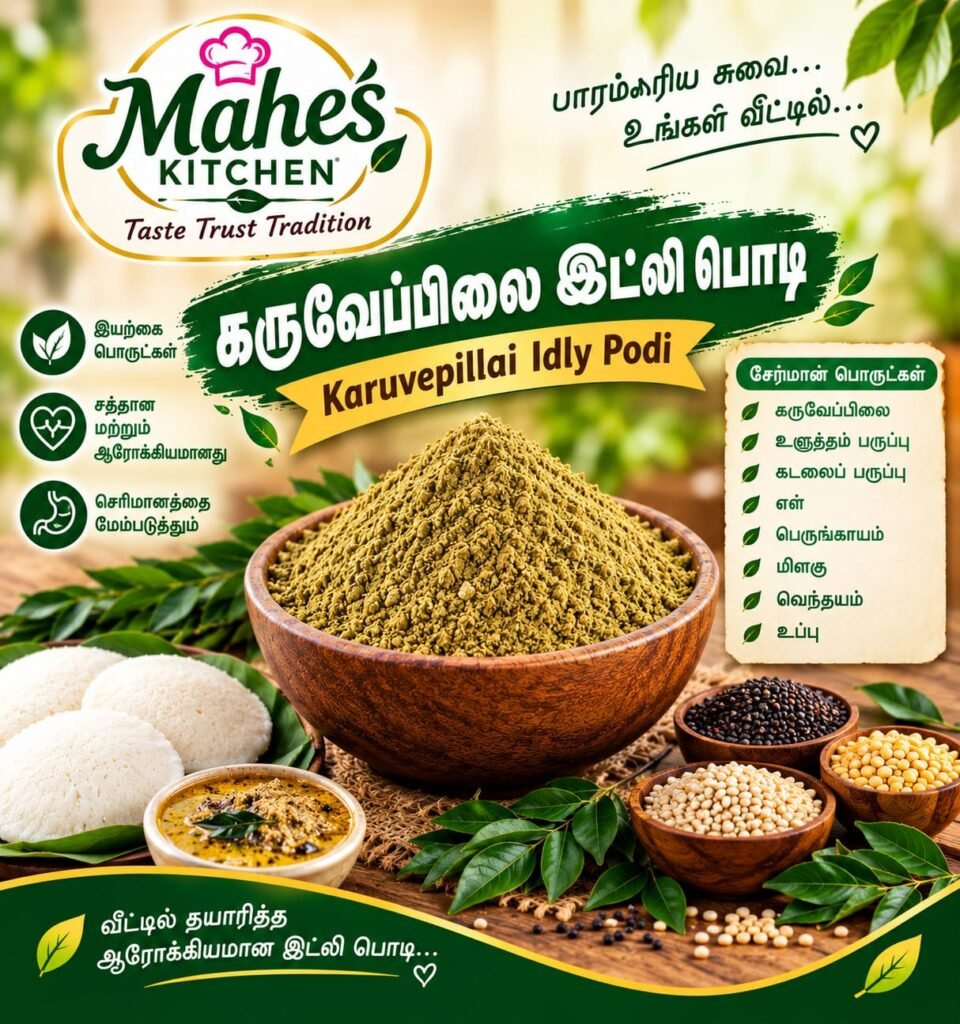
3. Curry leaf (karuveppilai) podi
Fresh curry leaves are roasted until crisp and ground with lentils. The aroma is strong and fresh, and it pairs especially well with dosa and hot rice.
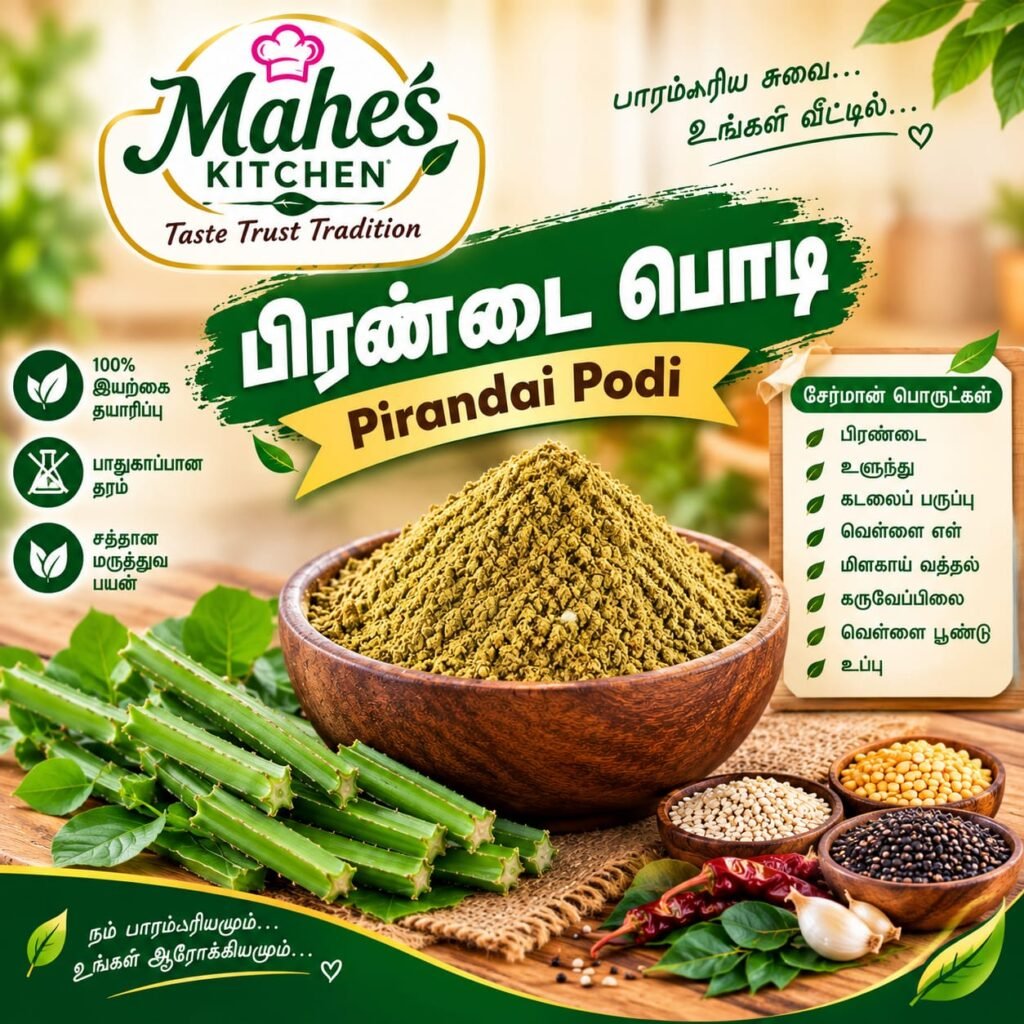
4. Pirandai podi
Pirandai (adamant creeper) is a traditional vegetable used in Tamil cooking. It is cleaned carefully, roasted and ground into a tangy podi. Many families make it during the cooler months.
5. Garlic podi
Roasted garlic adds a bold, punchy flavour. Popular with those who like spicy food.
6. Peanut podi
Roasted peanuts make the podi nutty and slightly sweet. Children often like this one because it is milder.
7. Flaxseed podi
Flaxseeds are dry roasted and ground with lentils and chillies. It has a nutty taste and is a popular modern variety.
8. Paruppu (dal) podi
Mainly roasted toor dal and chana dal with pepper and garlic. It is eaten with hot rice and ghee, the way many grandmothers served it.
Quick comparison
| Podi | Flavour | Best with |
|---|---|---|
| Classic milagai podi | Spicy, nutty | Idli, dosa |
| Moringa leaf podi | Earthy, mild | Idli, curd rice |
| Curry leaf podi | Aromatic | Dosa, hot rice |
| Pirandai podi | Tangy | Rice, idli |
| Garlic podi | Bold, spicy | Dosa |
| Peanut podi | Nutty, mild | Kids’ tiffin |
| Paruppu podi | Comforting | Rice with ghee |
How to eat idli podi the right way
- Put a spoon of podi on your plate and make a small well in the middle.
- Pour gingelly (sesame) oil or melted ghee into it and mix to a paste.
- Dip soft idlis or roll it inside a dosa.
- For travel, coat mini idlis in podi and oil. They stay good for a few hours and do not need chutney.
How to store podi
- Use a dry, airtight glass or steel jar.
- Always use a dry spoon. Moisture is the main reason podi spoils.
- Store away from the stove and direct sunlight.
- Home-made podi usually stays fresh for a few weeks at room temperature. Follow the “best before” date on packed podi.
Buying podi from home cooks
If you do not have time to roast and grind, many home food makers in Tamil Nadu sell fresh podi in small batches. On ShopC, you can find moringa, curry leaf and pirandai idli podi along with dosa and adai mixes from local kitchens. Pair them with gingelly oil from local sellers for the full experience.
For the history of this South Indian staple, see this article on chutney powder on Wikipedia.
Simple ways to use podi beyond breakfast
Idli podi is more versatile than most people think. Sprinkle it on buttered toast, mix it into hot rice with ghee for a quick lunch, or toss roasted vegetables in podi and oil. Some families add a spoon to curd rice for a spicy kick, or use it to season dosa wraps for school lunch boxes. Podi idli, where mini idlis are tossed in podi and ghee, is a favourite tiffin item.
Making podi at home: a quick guide
- Dry roast urad dal and chana dal separately until golden.
- Roast dried red chillies until crisp, and sesame until it splutters.
- Add asafoetida and salt.
- Cool completely and grind to a coarse powder.
Once you have the basic recipe, you can create your own idli podi varieties by adding curry leaves, moringa leaves, garlic or flaxseeds. Make small batches so the podi always tastes fresh.
Buying idli podi online
When you order podi online, check the ingredient list, the date of making and the pack size. Small packs of 100 to 250 grams are ideal for trying a new variety. Look for podi made in small batches by home cooks, as it usually tastes fresher than mass-produced versions. Trying a few idli podi varieties side by side is the best way to find your family’s new favourite.
Podi varieties for different family members
Elders may prefer milder dal podi with rice, while young adults often enjoy spicy garlic podi. For children, peanut podi or a mild moringa podi is a gentle start. Keeping two or three podi varieties at home means everyone finds something they like on the breakfast table.
Types of podi beyond idli podi
Tamil kitchens also make other types of podi: paruppu podi for rice, ellu (sesame) podi, coconut podi and kollu (horse gram) podi. Exploring these types of podi is an easy way to add variety to everyday meals.
Frequently asked questions
Try a new idli podi variety each week and your breakfast plate will never feel boring.
What is the most popular idli podi?
Classic milagai podi made with urad dal, chana dal, red chillies and sesame is the most common in Tamil homes.
Which oil is best with idli podi?
Gingelly (sesame) oil is the traditional choice. Ghee is also popular, especially for children.
How long does idli podi last?
Home-made podi usually stays fresh for a few weeks in an airtight jar if you always use a dry spoon.
More from the blog
Cotton Saree Care in Monsoon: Wash, Dry and Store the Right Way
Simple cotton saree care tips for the rainy season: gentle washing, how to dry cotton sarees indoors…
View more →
Protect Phone in Rain: Simple Monsoon Phone Care Tips at Home
Learn how to protect phone in rain with a mobile rain cover, simple monsoon phone care habits, wet p…
View more →
Herbal Tea for Rainy Days: Warm Drinks for Monsoon Evenings
Herbal tea for rainy days: how to brew hibiscus tea, blue pea tea and sukku malli coffee at home, wi…
View more →