
How to Store Pickles So They Stay Fresh for Months

A good pickle can lift a simple plate of curd rice into something special. But nothing is more disappointing than opening a jar of home-made mango pickle and finding a white layer of fungus on top. The difference usually lies in a few small habits. Here is how to store pickles so they keep their flavour, colour and crunch for months.
Table of Contents
Why pickles spoil
Pickles last because of three natural preservatives: salt, oil and acid (from lemon, tamarind or vinegar). Spoilage usually starts when moisture, air or dirty spoons get into the jar. Heat and direct sunlight after opening can also change the taste and colour.

How to store pickles: 9 proven tips
1. Use the right jar
Glass, ceramic (bharani) or food-grade steel jars are best. Avoid thin plastic containers for oily, acidic pickles, as they can absorb smell and stain.
2. Sterilise and dry the jar
Wash the jar with hot water, then dry it completely in the sun or in a warm oven. Even a few drops of water can start fungus.
3. Keep a layer of oil on top
For oil-based pickles like mango, lemon, garlic and non-veg pickles, the pieces should stay under a thin layer of oil. If the oil level drops, heat a little gingelly oil, let it cool and pour it on top.
4. Always use a dry spoon
This is the single most important rule. Never dip a wet spoon or a spoon used for other food into the jar. Keep a dedicated dry spoon for each pickle.
5. Close the lid tightly
Air and humidity enter through loose lids. A tight lid also keeps the aroma from filling your fridge or shelf.
6. Store in a small jar for daily use
Keep most of the pickle in a large jar and fill a small jar for the table every week. The big jar is opened less often and stays fresh longer.
7. Keep it away from heat and moisture
Store pickles on a cool, dry shelf, away from the stove and the sink. After opening, avoid placing jars in direct sunlight for long periods.
8. Refrigerate low-oil and non-veg pickles
Thokku, low-oil pickles, fish, chicken and prawn pickles usually last better in the fridge after opening. Always follow the storage instructions on packed pickles.
9. Label with the date
Write the date of making or opening on the jar. It helps you use older pickles first.
Storage guide by pickle type
| Pickle type | After opening | Notes |
|---|---|---|
| Mango, lemon, lime | Cool shelf, oil on top | Traditional pickles keep well with enough oil and salt |
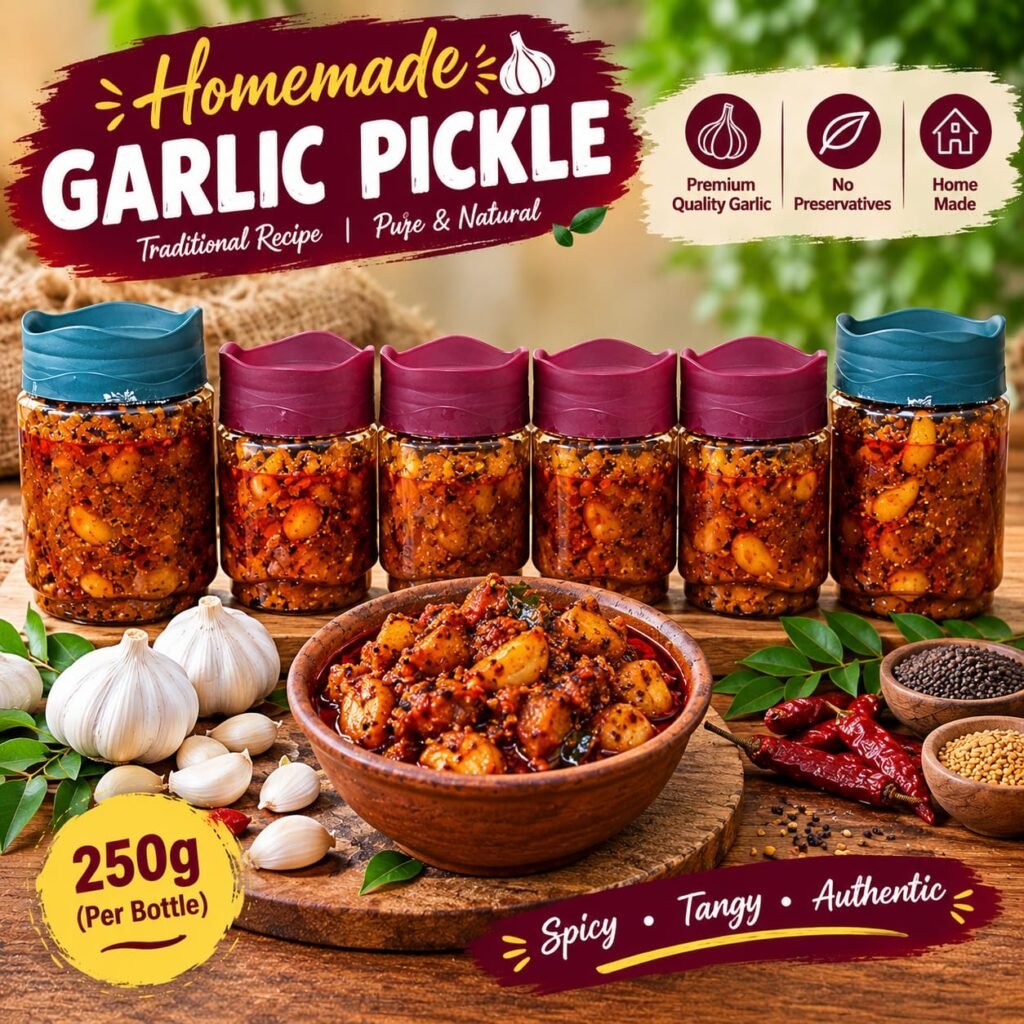
| Garlic, ginger | Cool shelf or fridge | Keep pieces under oil |
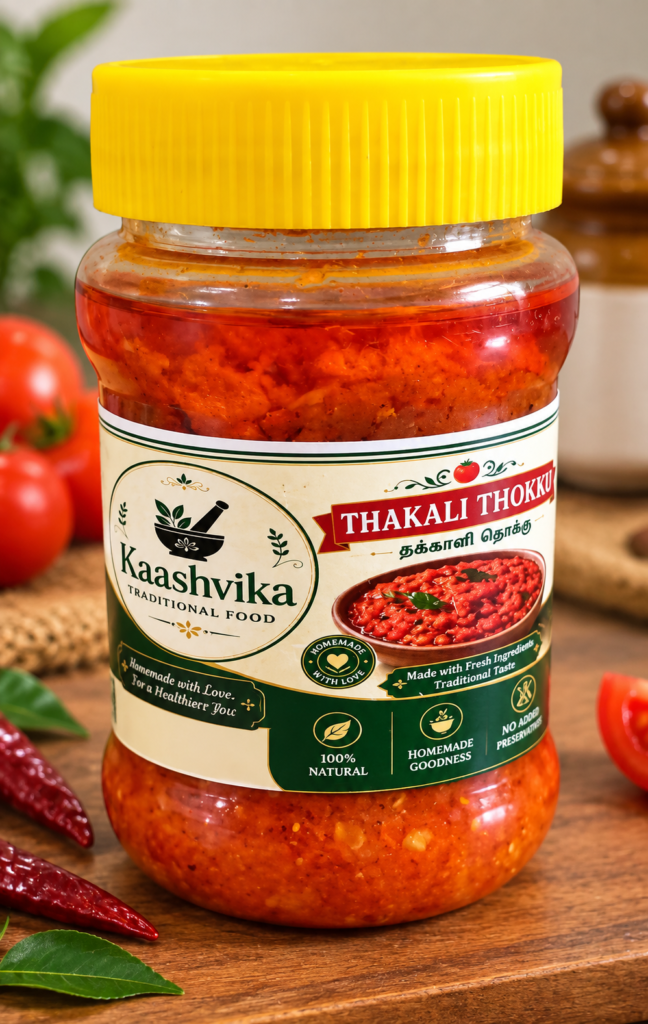
| Thokku (tomato, pulicha keerai) | Fridge | Lower oil, use within weeks |
| Fish, chicken, prawn, beef | Fridge | Use a dry spoon every time |
| Vathal (sun-dried) | Airtight jar on shelf | Keep completely dry; re-dry in sun if soft |
Signs that a pickle has gone bad
- White or green fuzzy layer on top
- Sour, fermented or unusual smell that was not there before
- Slimy texture or bubbles
- Change in colour across the whole jar
If you see these signs, it is safer to throw the pickle away. Do not just scrape off the top layer.
Buying pickles online
When ordering pickles, check the ingredients, the oil used, the “best before” date and the storage instructions on the label. Fresh, small-batch pickles from home makers often taste closest to home-made.
On ShopC, you can find mango, garlic, fish and chicken pickles, thokku and vathal from local makers across Tamil Nadu.
For background on food safety and preservation, the Food Safety and Standards Authority of India publishes consumer guidance.
Making pickles last longer: kitchen habits
Small habits make a big difference. Keep a separate shelf for pickles away from the stove. Wipe the rim of the jar after every use so oil does not collect and attract ants. If your family eats pickle with every meal, keep a small serving bowl on the table so the jar is not opened again and again.
How long do homemade pickles last?
It depends on the recipe. Traditional mango and lemon pickles made with plenty of salt and oil can last for months. Garlic and ginger pickles also keep well. Thokku and non-veg pickles have a shorter life and usually need the fridge after opening. Packed pickles should always be used within the date printed on the label.
Once you know how to store pickles properly, you can make or buy larger batches during mango season and enjoy them right through the year.
Reviving a pickle that looks dry
If the pickle has absorbed most of its oil and looks dry on top, heat a few tablespoons of gingelly oil until it is warm, let it cool fully and pour it over the pickle. Mix with a dry spoon so every piece is coated. This simple step protects the pickle and brings back its glossy look. Never add oil while it is still hot, as it can cook the pieces and change the taste.
Storing homemade pickles for gifting
If you send homemade pickles to relatives in other cities, pack them in leak-proof glass jars, seal the lid with tape and wrap each jar in newspaper and a plastic cover. Add a small label with the pickle name and date of making. Homemade pickles travel well when the oil layer is intact and the jar is filled close to the top.
Frequently asked questions
Follow these simple steps on how to store pickles, and every jar will taste as good on the last spoon as on the first.
Should homemade pickles be stored in the fridge?
Traditional mango and lemon pickles with enough oil and salt keep well on a cool shelf. Low-oil pickles, thokku and non-veg pickles are better kept in the fridge after opening.
Why does fungus grow on pickles?
Fungus usually grows when moisture or a wet spoon gets into the jar, or when the oil layer on top is too thin.
Which jar is best for storing pickles?
Glass, ceramic or food-grade steel jars with tight lids are best for oily and acidic pickles.
More from the blog
Cotton Saree Care in Monsoon: Wash, Dry and Store the Right Way
Simple cotton saree care tips for the rainy season: gentle washing, how to dry cotton sarees indoors…
View more →
Protect Phone in Rain: Simple Monsoon Phone Care Tips at Home
Learn how to protect phone in rain with a mobile rain cover, simple monsoon phone care habits, wet p…
View more →
Herbal Tea for Rainy Days: Warm Drinks for Monsoon Evenings
Herbal tea for rainy days: how to brew hibiscus tea, blue pea tea and sukku malli coffee at home, wi…
View more →